Specialty Salt: What Buyers Should Know

Suppliers and retailers seek unique varieties and blends to differentiate their offerings.

Retailers and suppliers of specialty and artisan salts are reaping the benefits of increasing consumer interest in the pedigree of the foods they eat.

Many of these salts tout their minimal processing and discreet place of origin, appealing to consumers seeking more natural foods overall. As the category has grown and consumers have become more knowledgeable about the nuances that distinguish various types of salt on the market, suppliers have expanded their offerings to include more colors, textures, and flavors.

“When we first started, it was a huge educational process for the customers,” says John Tarallo, founder of Pittsburgh’s Steel City Salt Co., a salt supplier that opened its first retail store about 18 months ago. “Not many people knew about salts, and the ones that did, didn’t know much. Now they are interested in the origins of products, and they are much more educated about salts.”

Tarallo launched Steel City in 2014 by offering a handful of imported specialty salts to restaurants, but he soon found strong consumer demand via an outdoor stand in Pittsburgh’s Strip District, a local food market. It led to the opening of the brick-and-mortar location. He is among the many suppliers and retailers in the industry that have seen consumer interest in gourmet and craft salts continue to expand.

Adding Texture
Salt either comes from the ocean or from the mining of former ocean beds and can be processed in several ways. Artisanal salts are generally those that are considered to be crafted by hand using traditional methods. Fleur de sel, for example, is made by skimming the delicate salt flakes that float at the top of shallow coastal pools.

Although craft salts embody a range of subtle flavors and other qualities that affect how they interact with other foods, often the most sought-after attributes of many specialty salts are their color and texture. Colors can range from white to various shades of pink or red to black, depending on the trace minerals that are contained in the salt naturally, or how they are processed. Himalayan salt, for example, obtains its pink color naturally from its mineral content, while most black salts are mixed with activated charcoal.

Texture—especially crunchiness—has also become a more important attribute for consumers. “The finishing salts, especially the flaky and the very coarse salts, are becoming popular,” says Brett Cramer, co-founder of salt supplier The Spice Lab. “Texture is such a huge component in cooking, and a nice, crunchy salt takes it to the next level.”

Salts have slight taste differences that stem from the trace minerals in the water or the ground from which they are harvested and, as consumers learn about these variations, as well as how different salts affect the flavor of other foods, they are stepping up their demand for high-end, region-specific varieties.

“We are selling more quality products into more and more stores,” says Mark Bitterman, author of a comprehensive book about salt, and founder and CEO of The Meadow, which operates two specialty food stores in Portland, Ore., where it is based, and one each in New York and Tokyo. “I think the market has more ground to gain.”

Ben Jacobsen of Portland, Ore.-based Jacobsen Salt Co., says his company “continues to gain market share and traction.”

“The most significant trend we are seeing is people continuing to see the power and importance of using great salt in every meal,” he says. “Craft salts were not always widely available in the U.S. The rest of the world uses good salt in everything. Why shouldn’t we?”

Interest in Blends
Some salts that were once considered specialty have become much more mainstream, says Cramer of The Spice Lab. Pink Himalayan salt, for example, has become so ubiquitous that it is no longer the novelty it was just a few years ago, although it is still prized for its color and its delicate flavor. “The customer is still buying it, and we’re selling more now than we did three years ago, but it’s available in thousands of different places,” he says.

Instead, Cramer and other retailers and suppliers say they are seeing increasing interest in spice blends and rubs that incorporate gourmet or artisanal salts.

Tarallo says Steel City’s salt and spice blends—all of which he produces in-house—have become the dominant portion of his business. The company’s best seller is its Steeltown Garlic & Herb flavor, which is made using Himalayan salt.

One of the newer blends is Dill Pickle Salt, which is made using a Sicilian salt as a base and combined with dill and coriander. “It tastes just like a dill pickle, but it’s great for fries and popcorn,” among other uses, Tarallo says.

He says blends may be popular among consumers who are unsure about exactly how to use other gourmet or artisan salts. “People might say, ‘I could get this coarse Peruvian salt, but I’m nervous. Let’s try the Garlic and Herb first. It’s easier, I can put it on everything, and if I like that, I can try something else,’” Tarallo continues.

He is always on the lookout for unique salts from around the world, such as Sal de Gusano from Oaxaca, Mexico, which is ground with agave worms and roasted chilies, yielding a smoky and earthy flavor. The salt is particularly favored by drinkers of mescal. “It’s pretty difficult to find, but when they find it, they buy it up,” says Tarallo.

Custom Blends
One of the growing parts of The Spice Lab’s business is creating custom blends for retailers to use in their prepared foods operations.

“We do custom blends specifically for [clients] so that their customer gets a blend that’s unique in the marketplace, and they love that,” Cramer says.

Jacobsen Salt Co. seeks to distinguish itself with an assortment of GMO-free seasoning blends, including Steak, Seafood, Taco, and Ramen varieties. Infused salts including Black Garlic, Rosemary, and Black Pepper are also among top sellers. This year, Jacobsen has more seasonings planned, as well as collaborations with other spice companies such as Diaspora Co., and Burlap & Barrel.

Cramer says many consumers have become accustomed to specialty salts having a particular hue and might not be aware that some of the best, most interesting salts on the market are actually white.

To gain more traction for his company’s less-colorful salts, he’s offering a fleur de sel from South America that he’s co-branding with celebrity chefs, including Curtis Stone and Wolfgang Puck. “When they say it’s good, people will buy it,” says Cramer. “If I say it’s good, who the heck is Brett saying this white stuff is any good?”

Emerging Flavors
Mark Zoske, founder and CEO of gourmet salt producer SaltWorks, says he expects to see the demand for smoked and flavored salts—as well as flaky sea salt and pink Himalayan salt—continue to rise, especially as consumers seek out higherquality ingredients. Flavor preferences in the coming years will lean toward savory, smoky, and umami flavors; bold and spicy flavors; and international flavors, he says.

Among the flavors in the company’s Fusion Flavored Sea Salt line are Black Garlic, White Truffle, Wild Porcini, Ghost Pepper, and Thai Ginger. SaltWorks also recently introduced a cold-smoking technique it calls Perfect Smoke Technology that uses “real wood and premium salts,” Zoske says.

CPG manufacturers are also making increasing use of specialty salts, he says. The company supplies brands such as Pipsnacks that are seeking high-quality, clean-label ingredients.

“We’re working with a lot of manufacturers who are looking to feature gourmet salt like Pink Himalayan Salt or a flaky sea salt in their products,” Zoske says. “Gourmet flavors like black garlic, truffle, and even ghost pepper are being used in everything from chocolates and nut mixes to popcorn and potato chips.”


Specialty Salts Gain Traction on Restaurant Menus

Fine-dining restaurants have long highlighted some specialty salts on their menus, but more fast-casual and quick-service restaurant concepts are following suit, says Mark Zoske, founder and CEO of gourmet salt producer SaltWorks.

“Sea salt’s clean label aligns with the growing trend for menu transparency and better-for-you ingredients,” he says. “As consumers become more food-savvy and foodservice operators adjust their offerings to reflect shifting consumer demand, we will start to see gourmet salt mentioned more frequently as a descriptor on menus, especially fast casual and quick service. It’s only a matter of time before America’s favorite fast-food chains start offering items like French fries with truffle salt or chocolate chip cookies with flaky sea salt.”

Data from research firm Datassential shows that the trend may already be beginning to take hold. Casual sports-themed chain Buffalo Wild Wings featured sea salt on its All American Cheeseburger, and Starbucks included sea salt in its Salted Caramel Malted Frappucino.

Some other examples of specialty salts appearing on menus in the past year include:

  • The A.M. Superfoods Bowl from First Watch included a chia seed pudding topped with granola and fruits, served with whole-grain artisan toast topped with almond butter and Maldon sea salt.
  • The Kitchen Sink Cookie from Panera Bread was a shareable treat made with semi-sweet chocolate, milk chocolate, caramel pieces, pretzels, and finished with flake salt.
  • Burger chain Red Robin featured red Hawaiian sea salt in its Salted Caramel Milkshake.
  • Fine-dining chain Village Tavern offered a Fish & Chips dish that included French fries with Mediterranean sea salt.
  • Vitality Bowls Superfood Cafe used pink Himalayan salt on its Avocado Toast Panini, which also included smashed avocado, fresh lemon, olive oil, and hemp seeds on whole wheat or gluten-free toast.

Specialty salts also add color and flavor to cocktails, such as:

  • Fig & Olive’s Escape to Provence, featuring Belvedere vodka, rosemary, honey, sea salt, grapefruit juice, lemon juice, pink peppercorn, and aromatic bitters.
  • The Top Shelf Black Diamond Margarita from Houlihan’s, which is made with Maestro Dobel Diamante tequila and Cointreau and finished with a black salt rim.

Datassential’s research shows that nearly all varieties of specialty salts have been gaining penetration on restaurant menus. In the past year, only Himalayan salt saw a decrease in menu penetration, although it was up more than 300 percent in the last four years. Top gainers in the past year include pink salt (up 150 percent), flake salt (up 200 percent), and Hawaiian salt (up 50 percent), although each has menu penetration of less than 0.1 percent. Sea salt has the highest penetration of any specialty salt variety at 13.8 percent, which reflects growth of 8 percent in the last year and 42 percent in the last four years.


Telling Salty Stories at Retail

Retailers should be ready to explain what differentiates their specialty and artisanal salts, while keeping in mind that their customers may be coming to the table armed with considerable knowledge already.

“It’s always been the consumer leading this [trend toward craft salts],” says Mark Bitterman, founder of The Meadow, a four-store specialty retailer known for its carefully curated salt selection. “Consumers are attuned with aligning the food that they buy, and cook with, with their values.”

He says he seeks to instill an air of discovery and learning in his stores that appeals to today’s curious shoppers. “We are focused on engaging with every customer we see, trying to respect people’s intelligence and the joy of discovery,” says Bitterman.

Ben Jacobsen, founder of craft salt producer Jacobsen Salt Co., agrees that retailers should be prepared to talk with customers about the origins of the salt, how it’s made, and why it’s special. As a practical matter, he suggests encouraging consumers to taste gourmet and artisanal salts by sampling salts sprinkled on a buttered baguette.

When it comes to merchandising, Mark Zoske, founder and CEO of gourmet salt supplier SaltWorks, suggests that retailers can drive incremental sales of specialty salts through seasonal cross-promotional opportunities. “For example, during the summer months or tailgating season, sales of smoked salts could increase if they were also promoted in the butcher section,” he says. “Similarly, flavored gourmet salts could be promoted during the holidays for everything from fancy cocktails to desserts.”


Mark Hamstra is a regular contributor to Specialty Food.


from Food Trends https://ift.tt/2Q1vl6b
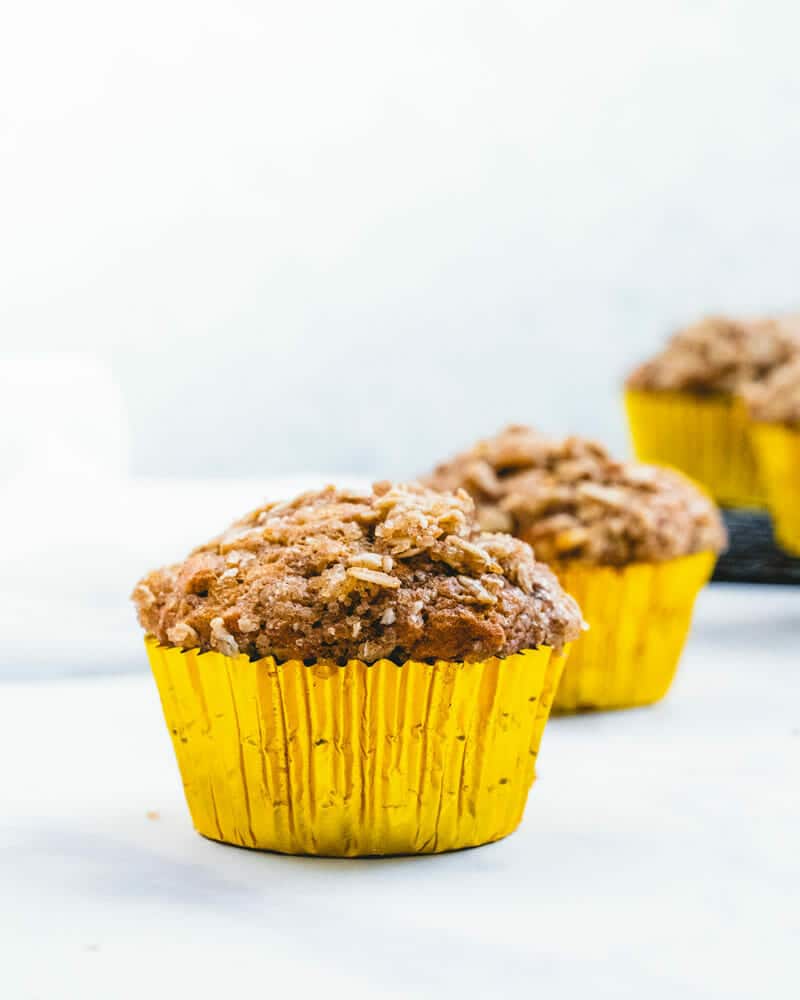
Vegan Banana Muffins

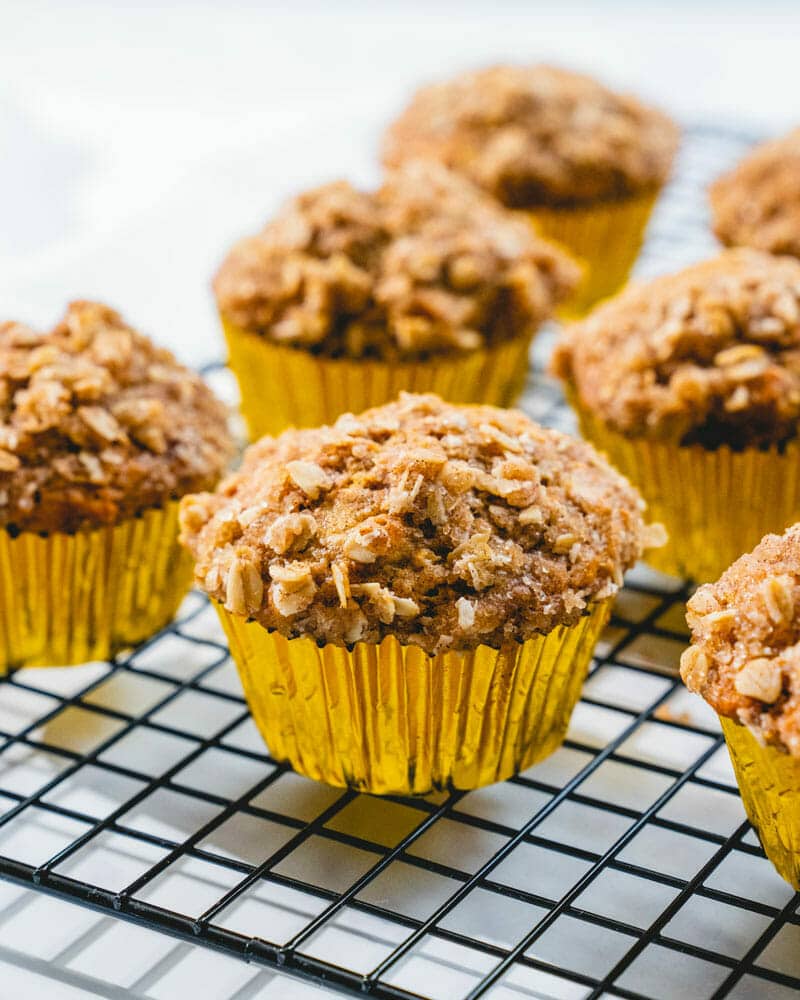
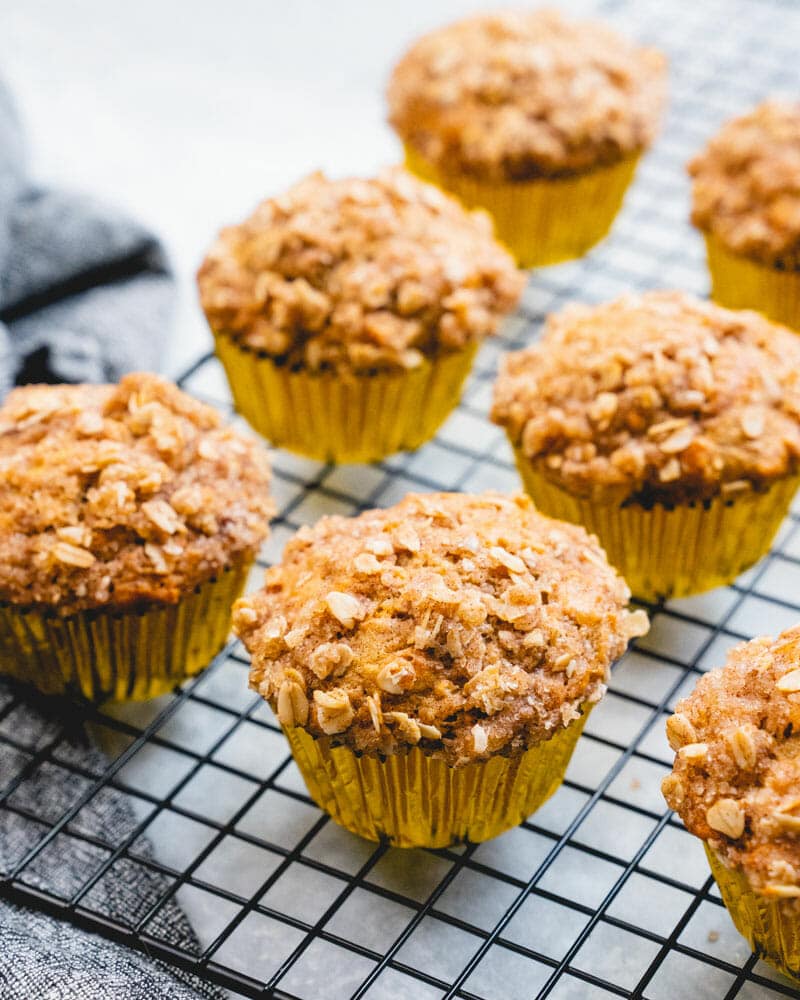
These are the BEST vegan banana muffins, moist and fluffy with just the right banana flavor and a crunchy streusel topping. They’re irresistible!

Vegan banana muffins

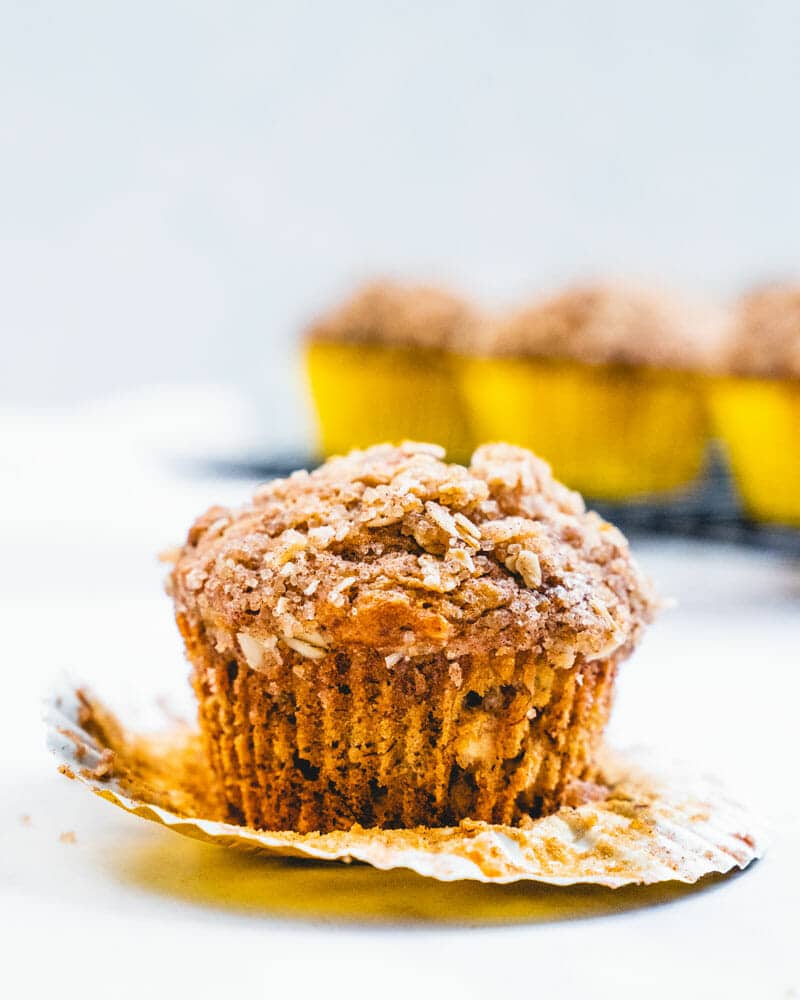
Here’s a vegan banana muffins recipe that will make everyone say, “Wow!” They’re fluffy and just sweet enough, with the perfect banana flavor. Even better, a streusel topping gives every bite a little crunch and extra touch of sweet. You’d really never know these are a vegan baked good, so they work for eaters of all diets! We served them to some friends and heard “best banana muffins” mumbled between bites. Here’s how to make them.

Why to make these vegan banana muffins

There are lots of vegan banana muffins recipes in the world, but this one is our favorite. Our son Larson gobbles them down like there’s no tomorrow. Why? Here the features of this tasty muffins:

  • They’ve got just the right banana flavor: and it works as a binder! These muffins are perfectly scented with banana. Even better, it works as a binder so you don’t have to use an egg substitute like a flax egg. (We love using them, it just cuts out a step for this recipe!)
  • Crunchy streusel topping. This topping adds the perfect sweetness and crunch to each bite. You can use either sparkly turbinado sugar (see more on that below), or brown sugar.
  • Rum optional! Alex and I added a splash of rum, just for fun. If you have it onhand, it’s a nice addition to baked goods (totally optional).
Vegan banana muffins

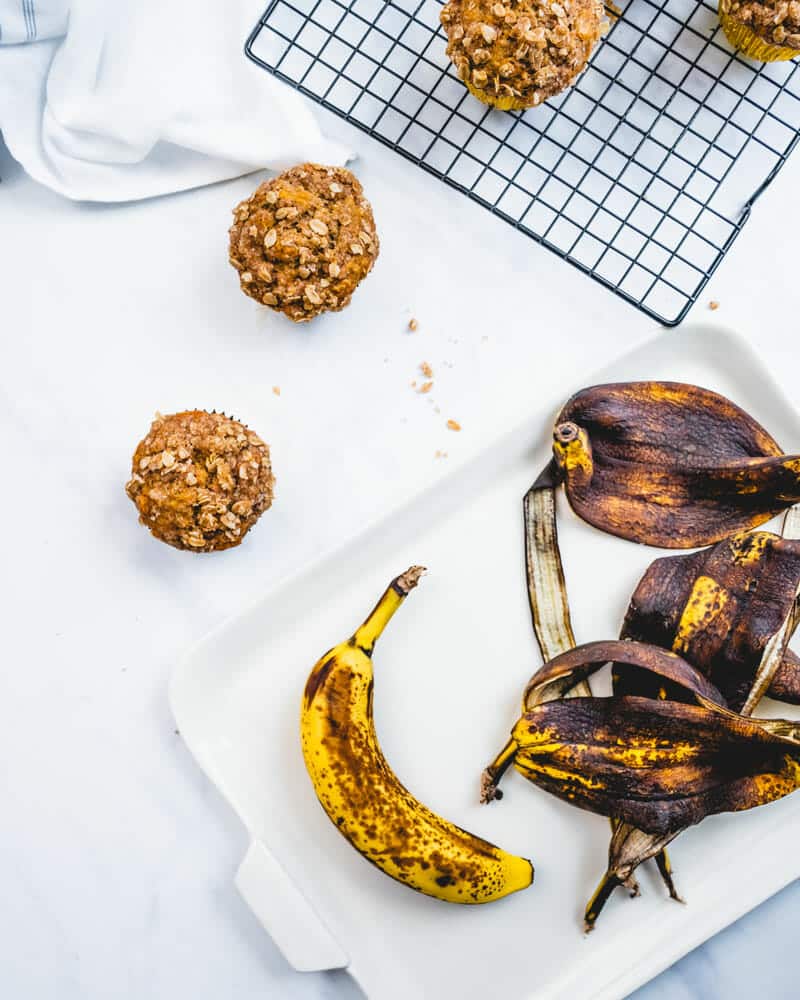
Make sure your bananas are very ripe!

As you probably already know, the key to baked banana recipes is: make sure your bananas are very ripe. What does that mean? The bananas should have brown spots on the outside: or be completely brown! Bananas in this ripe state brings out the natural sweetness and moisture of the fruit. It’s not worth making these vegan banana muffins with unripe or even ripe bananas.

How to quickly ripen a banana? Place it in a brown paper bag and fold over the top. If you have an already ripe banana or apple, place that in the bag too: it speeds up the process by adding more ethylene gas.

Banana peels
Yes, you want bananas that are very ripe: from brown spotted to black!

Variation: want a healthy gluten-free banana muffin?

Is this vegan banana muffins recipe healthy? Well, it’s not a health food. But it’s not as unhealthy as some muffins can be, loaded with sugar and butter and basically glorified cake. It’s got oats and a natural sweetener (maple syrup), and uses coconut oil to stay plant based.

Want an even healthier gluten-free banana muffin? Our Blender Muffins are magically gluten free by way of oats and a blender: there’s no refined flour or sugar at all. Use the vegan option of flax eggs.

Vegan banana muffins

How to store muffins

What’s the best way to store these vegan banana muffins? The texture of the streusel can become soggy if you don’t store them correctly. Here’s what we recommend:

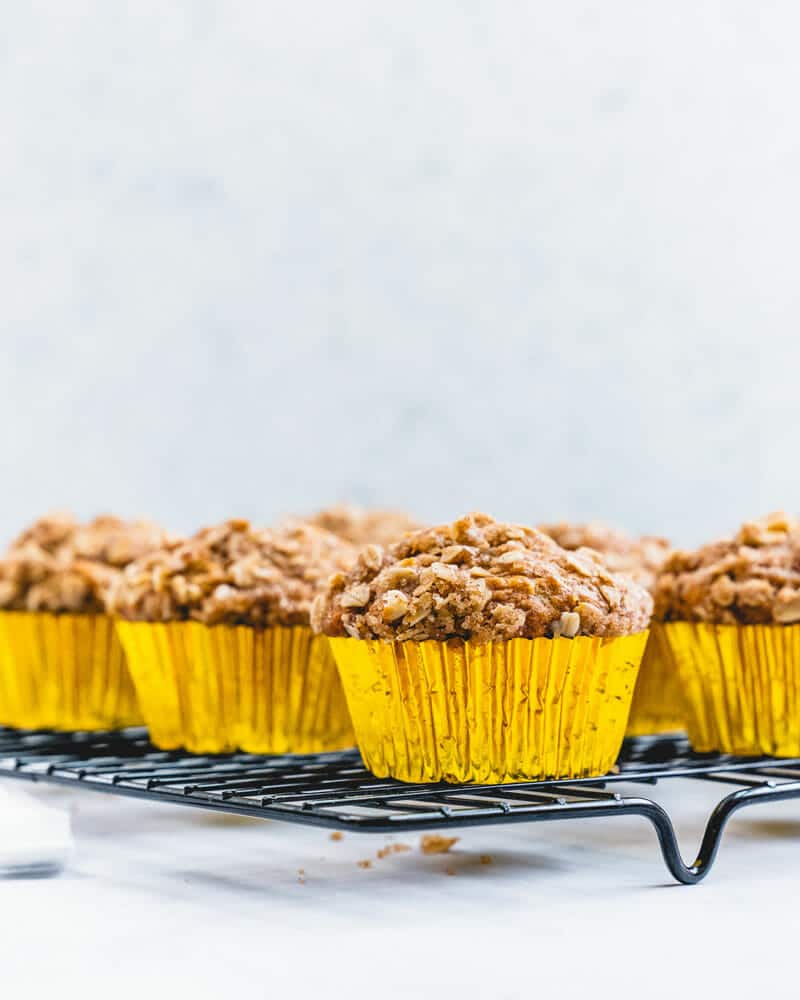
  • 1 day: Leave the muffins on a cooling rack and cover with a clean, dry dish towel. This helps the crunchy streusel topping to stay intact.
  • Up to 4 days: Place a paper towel in the bottom of a sealed container, then place the muffins in and place a paper towel on top. The paper towels absorb any moisture, which helps to retain the crunchy topping.
  • Longer than 4 days: Freeze these apple muffins in a sealable container and store up to 3 months.
Vegan banana muffins

Similar vegan muffin recipes

Are you into vegan baking? (Here are all our Vegan Baked Goods, if so: from vegan bread to biscuits to brownies.) We also have two recipes that are similar to this vegan banana muffins recipe:

  • Vegan Apple Muffins You’ll never believe these vegan apple muffins are totally plant based! They’re moist and fluffy with a streusel topping that adds a sweet crunch.
  • Healthy Pumpkin Muffins The glittery streusel topping adds the perfect crunch, and the moist interior is pumpkin-spiced heaven. Use the vegan variation!
Banana muffins

More banana recipes

Got bananas? It’s easy to end up with more than you have time to use. Here are all our favorite banana recipes:

This vegan banana muffins recipe is…

Vegetarian, vegan, plant-based and dairy-free.

Print
Vegan banana muffins

BEST Vegan Banana Muffins


1 Star2 Stars3 Stars4 Stars5 Stars (5 votes, average: 5.00 out of 5)

  • Author: Sonja Overhiser
  • Prep Time: 20 minutes
  • Cook Time: 30 minutes
  • Total Time: 50 minutes
  • Yield: 12

Description

These are the BEST vegan banana muffins, moist and fluffy with just the right banana flavor and a crunchy streusel topping. They’re irresistible!


Ingredients

  • 1 1/2 cups plus 2 tablespoons all-purpose flour, divided
  • 3/4 cup rolled oats, divided
  • 1 tablespoon cinnamon, divided
  • 1 teaspoon ginger
  • 2 teaspoons baking powder
  • 1 teaspoon baking soda
  • 1/2 teaspoon kosher salt
  • 1/2 cup maple syrup
  • 1 1/2 cups mashed banana (about 3 large or 4 medium)
  • 1/2 cup coconut oil, half melted and half room temperature
  • 1 tablespoon vanilla extract
  • 1 tablespoon rum (optional)
  • 1/4 cup turbinado sugar (or brown sugar)

Instructions

  1. Preheat the oven to 350 degrees Fahrenheit. Add 12 muffin cups to a muffin tin.
  2. In a medium bowl, mix the 1 1/2 cups all-purpose flour, 1/2 cup rolled oats, and 2 teaspoons cinnamon with the ginger, baking powder, baking soda, and kosher salt.
  3. Melt 1/4 cup coconut oil with the maple syrup. In another bowl, combine the maple syrup and coconut oil mixture with the mashed banana, vanilla, and rum (optional). Mix the wet ingredients into the dry ingredients and stir until a smooth batter forms.
  4. In another medium bowl, add the remaining 1/4 cup rolled oats, 2 tablespoons flour, and 1 teaspoon cinnamon along with the turbinado sugar and 1/4 cup room temperature coconut oil.
  5. Cut the coconut oil into the remaining ingredients using a pastry cutter or fork until it’s evenly combined and a crumbly streusel topping forms.
  6. Divide the batter evenly into the muffin cups. Then top with a thin layer of streusel.
  7. Bake for about 25 to 30 minutes, until a toothpick comes out clean (if your oven is uneven, reverse the pan halfway through). Allow to cool in the pan for 5 minutes, then remove the muffins and place them on a cooling rack to fully cool.

  • Category: Muffin
  • Method: Baked
  • Cuisine: Baked Good

Keywords: Vegan Banana Muffins

A Couple Cooks - Healthy, Whole Food, & Vegetarian Recipes


from A Couple Cooks https://ift.tt/2QfR1fh

Roasted Broccoli (Best Ever!)

Oven roasted broccoli makes this green veggie taste SO GOOD you can’t stop sneaking bites! It’s charred until tender, then spritzed with lemon juice.

Roasted broccoli

Ready for the absolute BEST way to make this healthy green veggie taste incredible? Roasted broccoli. Alex and I whipped this up the other day, and the florets were as irresistible as french fries (maybe more so!). Roasting broccoli makes it come out tender and charred, with a mild , almost sweet flavor. Combine that with garlic and a few spritzes of fresh lemon juice, and wow! The flavor pops in a way you’d never imagine possible with this humble vegetable. Our 3 year old Larson kept asking, “Can I have more broccoli?” We 100% promise you’ll fall head over heels for this one.

Other favorite ways to cook broccoli? Best Steamed Broccoli & Simple Sauteed Broccoli.

Oven roasted broccoli

How to make oven roasted broccoli

Once you make roasted broccoli once, you’ll never go back. These crisp tender florets taste as satisfying to me as biting into a crunchy french fry. That’s saying something! You can dip them in sauces (see below), or just serve these florets straight up as an easy veggie side dish. Here are the basic steps you need to do:

  • Preheat: Preheat the oven to 425 degrees Fahrenheit. The very hot temperature will get them perfectly crisp tender!
  • Chop: Chop the florets into medium-sized florets (more on that below). Mix with olive oil and kosher salt.
  • Roast 20 minutes: Roast for 20 to 25 minutes, until tender and browned in parts.
  • Add flavor: Add another drizzle olive oil, grated garlic and fresh lemon juice. Serve warm!
Roasted broccoli

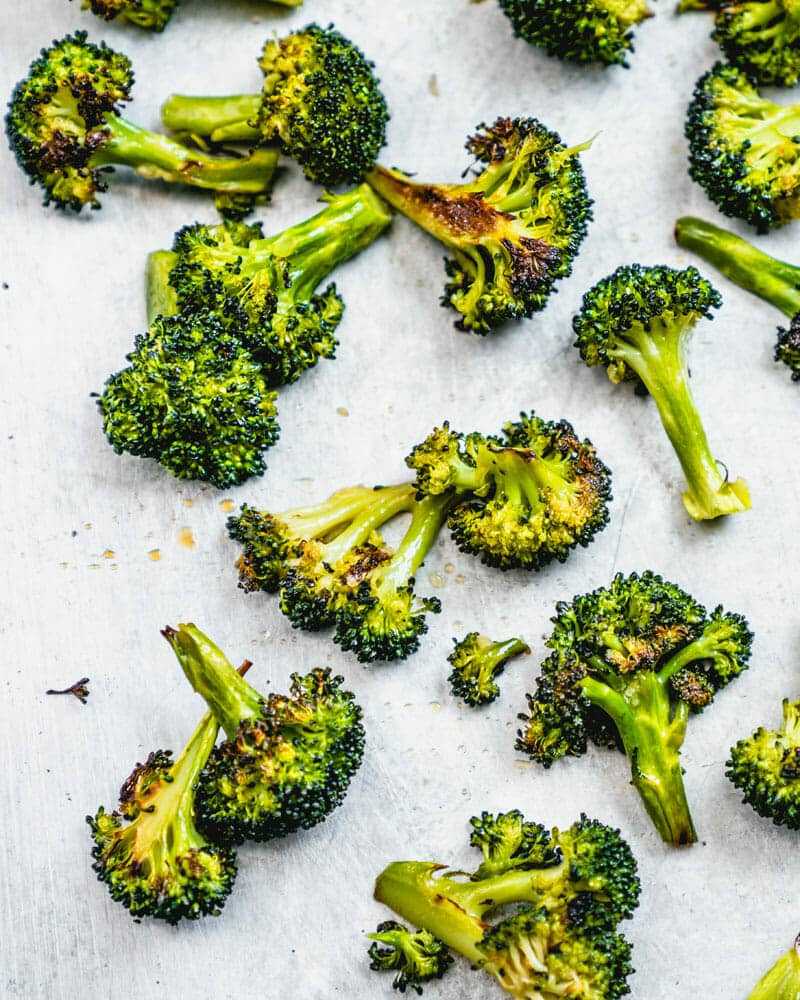
Chop the broccoli into medium florets with long stems.

Here’s one thing that can make or break your roasted broccoli: how you cut the florets! Now of course there’s no wrong way to cut a broccoli floret! But chopping them into very small florets makes them look stubby and a little uninspiring. Here’s what we do:

  • Keep the stems as long as possible! When you chop the floret, cut it at the base of where the floret attaches to the main stem. Doing this makes for an elegant and beautiful shape. See the photo below!
  • Make the florets medium sized, as similar in size as possible. It doesn’t have to be perfect, but keeping the florets similar sized helps them to cook through at the same rate.
Roasted broccoli

Dipping sauces for roasted broccoli

You can easily serve this lemon broccoli straight up alongside any main dish; see below for some ideas! But if you want to step them up, you can add a fun dipping sauce! Here are some favorites:

  • Creamy Cilantro Dressing This creamy cilantro dressing tastes incredible! It takes just 5 minutes and you’ll want to use it on everything. For vegan, try Creamy Cilantro Sauce.
  • Spicy Mayo A little spicy mayo drizzle on this broccoli would take it over the top!
  • Honey Mustard Sauce Dip them into honey mustard sauce for a fries-like experience! (Or ketchup, really.)
  • Hot Honey Drizzle with a little hot honey, and the sweet savory flavor is insane.
Oven roasted broccoli

Ways to serve oven roasted broccoli

This oven roasted lemon broccoli is easy to make and a delicious whole food plant based (WFPB) side dish. It pairs with main dishes of all kinds. You could even serve it as part of a grain bowl with quinoa or farro! Here are some ideas:

This roasted broccoli recipe is…

Vegetarian, vegan, plant-based, dairy-free, and gluten-free.

Print
Oven roasted broccoli

Roasted Broccoli (Best Ever!)


1 Star2 Stars3 Stars4 Stars5 Stars (5 votes, average: 5.00 out of 5)

  • Author: Sonja Overhiser
  • Prep Time: 10 minutes
  • Cook Time: 20 minutes
  • Total Time: 30 minutes
  • Yield: 4

Description

Roasted broccoli makes this green veggie taste SO GOOD you can’t stop sneaking bites! It’s charred until tender, then spritzed with lemon juice.


Ingredients

  • 1 1/2 pounds fresh broccoli, stem on (about 3 large heads or 6 heaping cups florets)*
  • 3 tablespoons olive oil, divided
  • 1/2 teaspoon kosher salt
  • Fresh ground pepper
  • 1 medium garlic clove
  • 2 tablespoon fresh lemon juice

Instructions

  1. Preheat the oven to 425°F. Line a baking sheet with parchment paper.
  2. Chop the broccoli into medium-sized florets, leaving a good amount of the stem for a nice shape (see the photo). Mix the broccoli florets with 2 tablespoons olive oil and the kosher salt. Roast for 20 to 25 minutes, until tender and slightly browned (no need to stir!).
  3. When the broccoli is done, remove the pan from the oven. Grate the garlic onto the pan, and add the remaining 1 tablespoon olive oil and the lemon juice. Use a spoon to gently toss it all together (separating any grated garlic that clumps together). Serve immediately.

  • Category: Side Dish
  • Method: Roasted
  • Cuisine: Vegetables

Keywords: Roasted Broccoli, Oven Roasted Broccoli

More broccoli recipes

We adore broccoli around here! If you do too, here are some of our favorite broccoli recipes:

  • Creamy Broccoli Potato Soup Intensely creamy, satisfying, and 100% plant based! It’s an easy healthy soup that everyone loves.
  • Broccoli Stir Fry This broccoli stir fry makes this green vegetable taste irresistible! Serve it as a tasty side dish, or add a protein and you’ve got dinner.
  • Broccoli Cheese Wild Rice Casserole A modern spin on wild rice casserole! It’s easy to make and a healthy spin that’s heavy on whole foods.

A Couple Cooks - Healthy, Whole Food, & Vegetarian Recipes


from A Couple Cooks https://ift.tt/2PMUm5e

Spinach Artichoke Dip

This hot spinach artichoke dip is irresistibly creamy and tangy! Everyone will park themselves in front of the bowl, then ask you for the recipe. Here’s a spin on spinach artichoke dip that takes this classic to a new level! This tangy, creamy dip is such a crowd pleaser that it might interfere with the conversation when you serve it (sorry!). Alex and I recently made this for some guests and in a few minutes, everyone was parked around the bowl exclaiming how good it was. “WOW, this is so good! Can I have the recipe?” was the chorus. Which of course, made us thrilled! Here’s how to make this perfect party snack, and what takes it into addictive territory. How to make spinach artichoke dip Things can get contentious when it comes to people’s opinions about this popular dip! This version is the hot spinach artichoke dip, the kind that’s baked in the oven and served warm. There’s also a cold version of spinach artichoke dip: and we’ve got a recipe for that too. Here’s our Easy Spinach Dip: it’s served cold and only takes 10 minutes to make. For this hot spinach artichoke dip, you’ll make a similar […]

A Couple Cooks - Healthy, Whole Food, & Vegetarian Recipes


from A Couple Cooks https://ift.tt/2PLikgS

Easy Mexican Salad

This chopped Mexican salad is the best easy side dish for tacos and enchiladas! It’s topped with savory cilantro lime dressing and crunchy tortilla strips. Ever wonder what to serve with tacos and enchiladas? Us too. Alex and I serve Mexican-style meals quite a bit. And we’d never found a side salad that we loved: until this one! This Mexican salad is a chopped salad with Latin-style flavors: colorful veggies, cilantro lime salad dressing, and tortilla strips. It all combines into a super-flavorful dish that can be served as a side, or dressed up to work as a healthy main dish salad. It’s got 3 dressings to choose from, based on your tastes (easiest, easy and vegan). What’s in this Mexican salad? With this Mexican salad, we tried to keep it seriously simple as an easy side dish. At the same time, you can dress it up to customize it to your tastes and the occasion! You can even serve it as a main dish salad with adders (see below). Here’s what’s in the base of this chopped Mexican salad: Greens: The best is crunchy romaine! If you’d like, add some mixed baby greens for a contrast. Cherry tomatoes Sliced […]

A Couple Cooks - Healthy, Whole Food, & Vegetarian Recipes


from A Couple Cooks https://ift.tt/39fUCkK

Category Spotlight: Sipping for Wellness

Sales of functional beverages are burgeoning thanks to ingredient innovations and the emergence of the bio hacking trend.

Shoppers are taking their prescriptions to the grocery store and stocking up on ingredient-driven functional beverages that offer hydration with added health benefits.

Beverage solutions are lining retail shelves that fulfill myriad lifestyle needs beyond quenching thirst. Whether it’s collagen for skin hydration, bone and joint health, CBD for relaxation, turmeric for inflammation and immune support, pro- and prebiotics for gut health, or adaptogens for mental vitality, the functional ready-to-drink beverage category is on fire.

According to Research and Markets’ Functional Beverage Market - Growth, Trends and Forecast (2019 - 2024), the functional beverage market is projected to reach $208.1 billion by 2024. It is forecasted to witness a CAGR of 8.6 percent during the same period.

According to the Specialty Food Association’s State of the Specialty Food Industry research, refrigerated juices and functional beverages grew 18 percent at retail between 2016 and 2018, and are predicted to grow another 9.6 percent by 2023. Functional beverages with a focus on prebiotics are also an emerging trend from the recent Winter Fancy Food Show, according to the SFA Trendspotter Panel.

Convenience, the desire for clean ingredients, an inclination toward non-alcoholic beverages, and a desire to consume lower-sugar drinks over fruit juices and carbonated sodas, are just some of the reasons driving both sales and innovation in the functional beverages category as well as prompting consumers, from Gen-Zs to Boomers, to stores for a sip of grab-and-go wellness. According to a Mintel report titled Inspiration and Innovation in Functional Soft Drinks, 42 percent of consumers under the age of 34, and 22 percent over the age of 55, see the grocery store as a place to improve health.

“Beverage companies boasting optimized mental performance, clarity, and focus are especially attention-grabbing for people with demanding jobs and stress,” says registered dietitian Kylie Gearhart, NY Nutrition Group. While Gearhart cautions against products with overzealous benefit claims, which may or may not be backed by research, she says if someone tries a product and feels it was effective—and it’s deemed safe for consumption by a medical team—then consuming it to help meet a dietary need is a win.

Another driver pushing innovation in the functional beverage category is bio hacking.

“Bio hacking is an exciting trend that is driving change in the [functional] food and beverage industry,” says Bjorn Oste, founder of Good Idea Drinks, a naturally flavored, zero-calorie sparkling water with a blend of five amino acids and chromium, which is reported to balance blood sugar, curb sugar cravings, and make weight loss healthier. “A bio hacker’s primary belief is that the responsibility and control of our health lie in our own hands,” continues Oste. “And to achieve this, they make daily small and incremental diet and lifestyle changes.”

Oste says foods and beverages with scientifically proven properties are at the core of this trend since they can help the bio-hackers achieve a desired state of wellbeing, to help balance their bodies and make them work better.

“People want drinks that make meeting nutritional needs easier, just like certain vitamins. Or, they want drinks that give them complex or unique ingredients in a pleasant tasting drink experience. No one wants to pop a chunk of turmeric or kudzu root into their mouth and eat it,” says Arthur Gallego, founder of Gallego & Co. Marketing Consultants, an LA-based boutique consulting firm specializing in marketing strategy, particularly for natural or better-for-you food and beverage.

Interest in the idea of ‘food as medicine’ is growing. NPD Group finds that about a quarter of U.S. adults are trying to manage a health or medical condition by making healthy food and beverage choices, with younger adults ages 18-24 particularly interested in using foods to improve their health.

Shoppers want their beverages to do more for them than they have in the past. Just hydrating or energizing isn’t enough anymore,” says Julie Terrazzino, senior beverage category manager, KeHE. Terrazzino, who categorizes functional beverages as energy drinks, sports beverages, and protein drinks, says consumers are just looking for more.

The Ingredients
Here are some happenings in the functional beverage space that may deliver a quick and beneficial boost to a health-seeking crowd.

Adaptogens such as Ashwagandha, turmeric, holy basil, tulsi, maca, and an array of mushrooms including reishi, cordyceps, lion’s mane, and shiitake, are sought-after herbal pharmaceuticals in RTD beverages. These are known for helping manage the everyday stressors in life and promoting a mind-body connection.

“I see the industry in a growing stage of being formulation driven, with multiple natural ingredients and nutrients,” says Gallego. Gallego notes the big trends the past few years have been plant protein, probiotics, and most recently prebiotics in the form of plant fiber.

“For nearly 10 years it was about ‘single’ ingredient and ‘super’ ingredient,” he continues. “But people today want more in regard to taste, and brands are realizing single-ingredient drinks have a growth ceiling.”

At Woodstock Farmers’ Market in Vermont, drinks with a combination of ginger, turmeric, or tulsi are appealing to customers, notes grocery team leader Amelia Rappaport, while at Barons Market in Southern Calif., plant-based functional protein is big.

“Pop and Bottle RTD lattes enhanced with marine collagen and plant-based meal replacements like Koia are hot sellers, says Rachel Shemirani, senior vice president, Barons. Shemirani says she is noticing a shift away from heavy caffeinated energy drinks.

“It used to be function meant quick energy. Now we are seeing more customers gravitating toward beverages for stress relief or sustained energy that does not make you jittery. Anything with turmeric, adaptogens, and MCT oil like Kitu Supercoffee that also has protein, is definitely of interest to our customers—especially Gen-Zs, gymgoers, and those that follow a Keto diet.”

Still Crazy for Kombucha
The growth in popularity of probiotic fermented drinks over the past year shows no signs of stopping.

According to BCC Research, the international fermented ingredients market could grow to be worth $28.4 billion this year (an annual growth of 3.4 percent). And, dominating that growth since 2016 is kombucha. Adroit Market Research predicts that the market for fermented tea with live active cultures will grow at 13 percent CAGR in North America and hit $3.5 billion by 2025.

“The early days of kombucha were really not very good,” says Mike Fogarty, owner, Denver, Co.- based Choice Market. “Now, brands in the category are more approachable, having perfected taste by marrying flavors with probiotics for products that are low in sugar and attract customers of all ages who want a healthy gut.”

Among Fogarty’s 30 SKUs of kombucha, Rowdy Mermaid, Upstart Kombucha, and Tru Buch are popular.

“Some kombucha brands are reshaping their images to evolve with soda, and evolution and innovation will be the deciding factors in which kombucha brands lead the category in this new decade,” says Gallego.

Subbing Out Soda
As the functional beverage category continues to evolve, so do consumers’ perception of what soda can be. “The idea of what a soda is, is changing dramatically,” says Gallego. “The more familiar a functional beverage makes their proposition, the easier it is to connect with people about the functionality of that proposition.”

Gallego says brands like OLIPOP, which are rich in soluble dietary fiber but taste just like a sweet soda, are part of this soda evolution. “Ditto for mainstream kombucha flavors from brands like Health-Ade,” he says. “The familiarity of those flavors [Cherry Berry, Ginger Lemon, and Grape Vibes] makes it easier to get into kombucha “as a soda.”

But not all functional soda swaps need be bubbly.

“While we continue to see the degradation of traditional sodas, it’s cool to see all the functional, healthful drinks that customers can sub out for,” says Fogarty. Fogarty, Barons’ Shemirani and Gallego all tout Koia, the plant-based, dairy-free protein shakes that are coconut or almond milk based.

“The movement away from sugar has been strong across all categories and one of the most impactful trends within beverages,” says KeHe’s Terrazzino. “Other brands driving functional beverage innovation, according to Terrazzino, are Protein2O, an infused water with amino acids and whey protein isolate; Celsius, a pre-exercise supplement drink containing good-for-you ingredients, such as green tea with EGCG, ginger, calcium, chromium, B vitamins and vitamin C; and Roar, a USDA Organic electrolyte water.

Looking Ahead
As consumers continue to explore the mind-body connection via food, the future is bright for the functional beverage category.

“Brain health has recently become a hot topic and the expectation is that we will see nootropics in new entrants down the road, says Terrazzino. Nootropics are supplements and other substances that may improve cognitive function, particularly executive functions, memory, creativity, or motivation. These include Ginkgo Biloba, Gota Kola, caffeine, green tea, and L-Theanine, for examples.

“We’re going to see a big return to familiar and nostalgic taste profiles and ingredients along with more coffee alternatives, canned drinks with cascara and cacao,” says Gallego.

Fermented drinks will also continue to innovate. “Fermented has found strong mind share with people, and they associate fermentation with wellness,” continues Gallego. “And we’ll see an increase in alt-liquor, drinks like hard kombucha, or RTD coffee with higher ABV.”


New Functional Beverages

Alo Drink Jen Collagen + Aloe Vera Infused Water, Blood Orange and Lemon. With 2500 mg of low molecular weight marine collagen peptides for superior absorption and only 60 calories per 12-ounce bottle, this infused water claims to help improve hydration and skin elasticity. alodrink.com

Califia Farms Maca-’Nilla Almondmilk. This plant-based protein drink has the nutty taste of maca for a boost of energy and stamina. It has 8 grams of protein and is soy- and dairy-free. califiafarms.com

Flying Embers Hard Kombucha, Pineapple Chili. Pineapple with a hint of ginger and a subtle refreshing chili finish this hard kombucha (6.8 percent ABV and 115 calories). It is handcrafted with a calming adaptogen root blend of ashwagandha, turmeric, ginger, and astragalus. Zero sugar, gluten-free. flyingembers.com

Koia Keto Cookies ’N Cream. Low sugar and plant-powered, this functional drink is the latest flavor to join the Koia Keto product line. Koia Keto products are made with coconut milk, MCT oil, low net carbs, and zero added sugars to support a keto lifestyle; 12 grams of plant protein, 3 grams sugar, 5 net carbs, and 210 calories per bottle. drinkkoia.com

LIFEAID CBD Balance. Functional and refreshing, this brand straddles the line between soda, energy drink, and nutritional supplement. CBD Balance is lightly carbonated and contains 20 mg of organic broad spectrum hemp extract from Ojai Energetics, lemon balm, rosemary, and agave. lifeaidbevco.com

Olipop Strawberry Vanilla Sparkling Tonic. Not your average soda, this tonic features strawberry juice, fresh lemon, and pink rock salt as well as chicory root, Jerusalem artichoke, Kudzu root, and cassava flour for probiotic digestive health and plant benefits. Only 3 grams of sugar and 9 grams of fiber per 12-ounce can. drinkolipop.com

OTTO CBD Cider, Pear Rhubarb. Made from organic apples from the Pacific Northwest, this gluten-free sparkling cider has 30 mg of hemp-based CBD to promote relaxation. Alcohol- and THC-free. ottoscbdcider.com

Rowdy Mermaid Kombucha Lion’s Root. This small batch-brewed rooibos tea has a combination of Lion’s Mane mushroom, known traditionally to support brain function, turmeric for a boost of antioxidant, and pineapple for tropical flavor. Organic and non-GMO, this kombucha in a can has 9 grams of sugar per 355-ml serving (one can). rowdymermaid.com

Teaonic My Adrenal Mojo: Relax. This caffeine-free wellness drink is packed with plant extracts and herbs. It’s a balancing and energizing combo of: ashwagandha with ancient adaptogenic properties to help the body better adapt to stress; tart cherry and ginger juice for overall immunity; anti-inflammatory hibiscus; balancing cinnamon; and antibacterial clove. Two grams of sugar per bottle. teaonic.com

Xoca Cacao Fruit Soda. This company upcycles Ecuadorian cacao fruit (which is usually discarded after the seeds are taken out to make chocolate) to create a lightly fermented drink made with 50 percent juice from the cacao fruit, and natural sparkling spring water. Its clean source of energy comes from theobromine. Good for the gut and rich in B vitamins. Zero sugar. Available in Mint, Ginger, and Nada. drinkxoca.com


Functional Nutrients

Don’t be surprised if you start seeing more of these functional nutrients in grab-and-go beverages:

  • Ashwagandha
  • Baobab
  • Birch Sap
  • B vitamins
  • CBD
  • Collagen
  • Co-Q10
  • Elderberry
  • Ginger
  • Hyaluronic acid
  • Maca
  • Manuka honey
  • Reishi mushrooms
  • Spirulina
  • Turmeric


from Food Trends https://ift.tt/2uQeEDB

Vegan Enchiladas

These vegan enchiladas are over the top delicious! Stuffed with black beans and guacamole, they’re doused in a zesty homemade red enchilada sauce. WOW is all we can say about this vegan enchiladas recipe! It tops the charts (with our vegan lasagna and shepherd’s pie) as one of our most crowd-pleasing plant based recipes…ever. Tortillas are wrapped around a veggie filling oozing with flavor, and it’s all doused in a zesty homemade enchilada sauce. With the crunchy veggie topping, this dish looks simply incredible. And it tastes even better than it looks! Alex and my goal was a whole food plant based (WFPB) enchiladas recipe with no cheese substitutes or need for vegan cheese. With a few tasty tricks, it turned out even better than expected! Here’s how to make it. What’s in the best vegan enchiladas? Don’t let these vegan enchiladas fool you: they’ll satisfy people of all diets! They’re packed with zingy flavor and full of nutrients. Even better, there’s a lazy version and a version for when you have lots of time. Here’s what’s in these enchiladas (can you see it peeking out?): Veggie filling: The tasty filling features black beans, red onion, bell pepper, and portobello […]

A Couple Cooks - Healthy, Whole Food, & Vegetarian Recipes


from A Couple Cooks https://ift.tt/3coM9h0

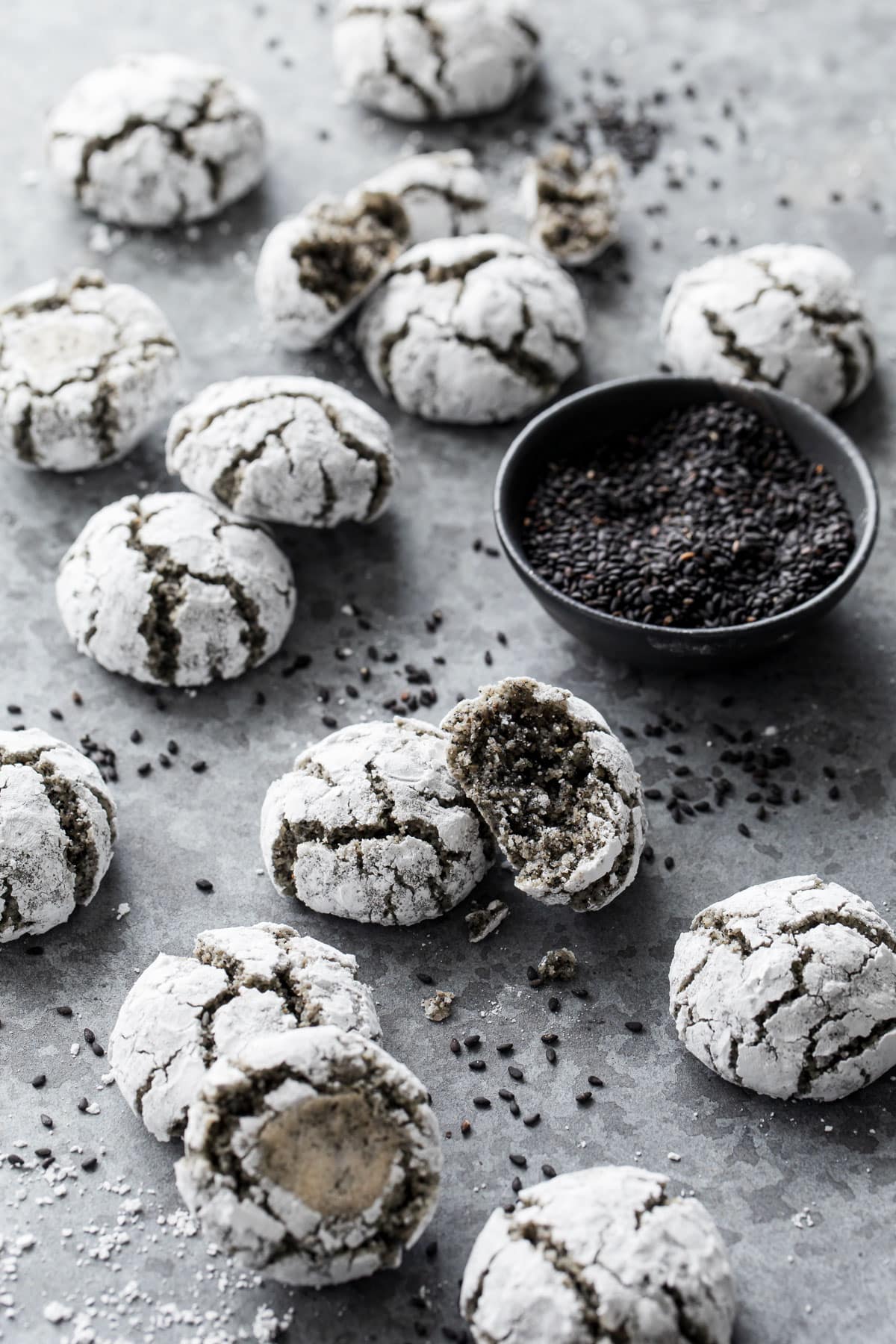
Black Sesame Amaretti Cookies

Amaretti are some of my favorite cookies for a reason: they are ridiculously simple to make, with only 3 main ingredients—plus the black se...