Future Fridays: Andrew Brentano on Cricket Farming

In this edition of the Future Fridays series, Andrew Bretano, co-founder and CEO of Tiny Farms Inc., explains how cricket protein may help save the world. In his What's the Big Idea? talk at the Winter Fancy Food Show, Brentano says, “Eating bugs is not a new idea. People have been eating insects around the world forever." By identifying a sustainable way to farm crickets, Brentano’s company is able to feed countless people for a fraction of the resources needed to raise livestock or agriculture. In addition, farming crickets emits less greenhouse gases as well, helping to reduce our carbon footprint. “There is no guidebook for how to grow crickets. You can’t call up your local agriculture office and ask. But we wanted to create a sustainable solution for everyone, so every farmer can get it up and running.” Though it may be a little gross to some, Brentano notes that the “ick” factor is decreased by turning the crickets into powder, which can then be added to everyday products like chips, sauces, pasta, energy bars, or even pet food.

View Bretano's full What's the Big Idea? talk above as part of SFA's Future Fridays series. 


from Food Trends https://ift.tt/2tRXi59

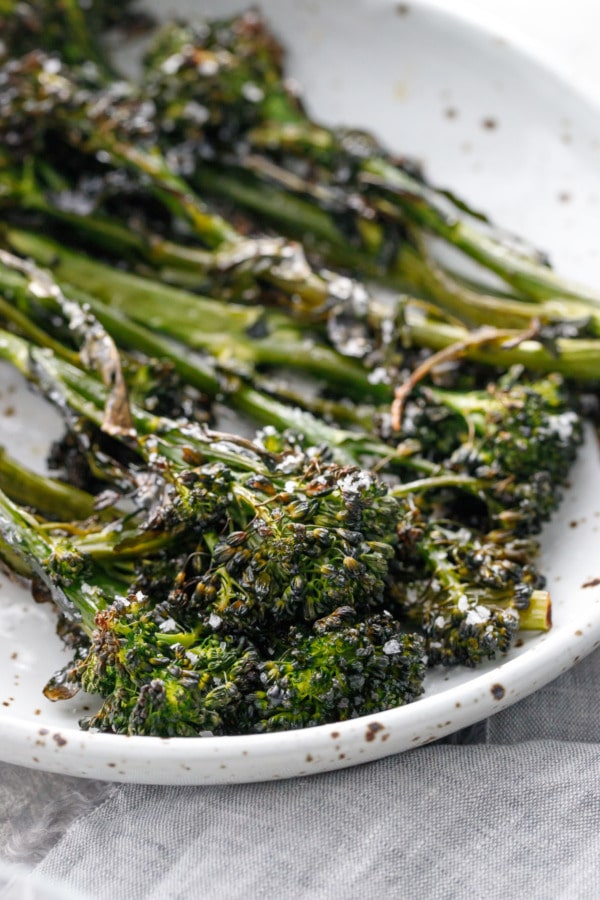
Crispy Oven-Roasted Broccolini

As far as perfect side dishes go, this one checks all the boxes: easy, delicious, crispy and salty—not to mention ready to eat in 15 minutes!

Perhaps one of our all-time favorite vegetable side dishes, this tender broccolini comes out of the oven delightfully crispy. Made with little more than a splash of olive oil, soy sauce, and a sprinkle of flake salt to finish it off, this oven-roasted broccolini makes a great side dish for steak, chicken, or whatever else is on your plate!

Crispy Oven-Roasted Broccolini finished with flake sea salt

One of our favorite side dishes is simple vegetables roasted with a splash of olive oil and a sprinkle of sea salt. And one of our favorite vegetables to roast in this manner is broccolini.

I mean, it’s almost a non-recipe it’s so easy. That said, some of my previous non-recipes have turned out to be my most popular, so I figure if it’s worth eating, it’s worth sharing here. Maybe you never thought to roast broccolini, or maybe you’ve never even heard of broccolini before. In that respect, this post is a success if only for expanding your culinary horizons.

We often just toss our broccolini with a bit of olive oil, but here I’ve added a splash of soy sauce too for a bit of salt and umami.

Speaking of salt… if you want crispier bits, don’t salt your broccolini before cooking it. The salt will draw water out of the stalk, and any residual water will prevent the broccolini from achieving divine crispiness.

I like to salt my broccolini with coarse flake salt as soon as it comes out of the oven. The slight crunch of the salt a perfect compliment to the crunchy brown bits.

(more…)


from Love and Olive Oil https://ift.tt/2ToBRHQ

Seasoned Baked Potato Wedges

12 Best Kale Recipes

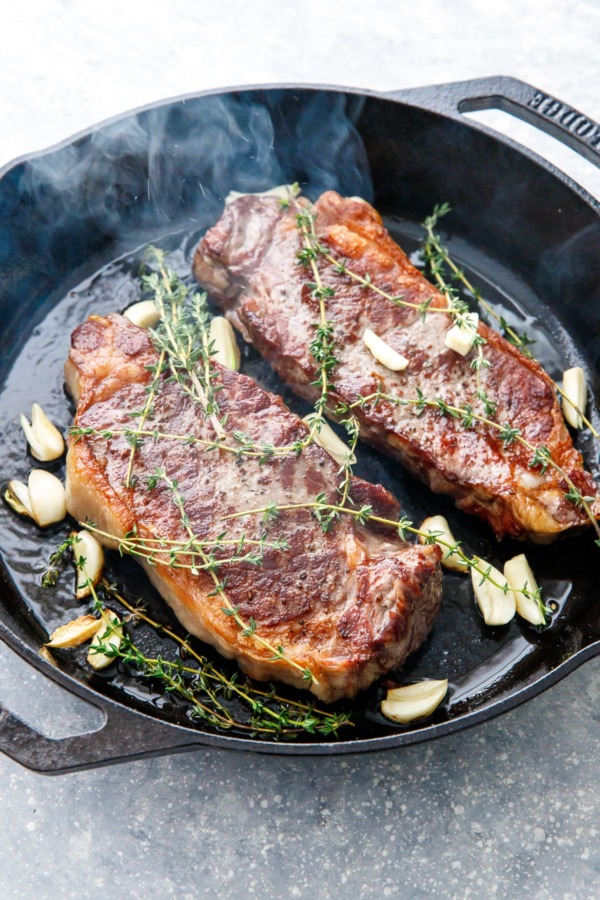
Reverse Sear Steak with Garlic and Thyme

The reverse sear is our favorite method for perfectly-cooked steaks: roasted low and slow in the oven and finished fast in a sizzling hot skillet, the result is tender and juicy steaks that are the perfect shade of pink all the way through.

Rather than searing your steaks first and finishing them in the oven, try the reverse sear method for optimal results every time. Granted, it does take a bit longer overall, but it’s a much more reliable and consistent method, producing tender and juicy steaks perfectly cooked every time.
How to Cook Reverse-Sear Steaks

Taylor first started to explore the reverse-sear method when we were researching recipes for our New Year’s prime rib. We had spontaneously picked up a small piece of meat at the market that week, and quickly realized we had no idea how to cook it.

Traditional steak and prime rib recipes have you sear the outside of the steak first in a sizzling hot skillet (which seals in the juices, apparently), and then finish it in a hot oven.

However, we’ve found doing the exact opposite is a better and more reliable way: cook the meat first in a low-temperature oven until it comes up to temperature, and then finish it in a screaming-hot skillet to create that perfect outer crust.

What you end up with is a piece of meat that is perfectly pale pink all the way through—instead of the traditional method where the outer ring is gray and only the inner-most strip is still pink. You’d get similar results cooking with a sous vide (which has a similar principle, bringing the meat up to temperature slowly and evenly).
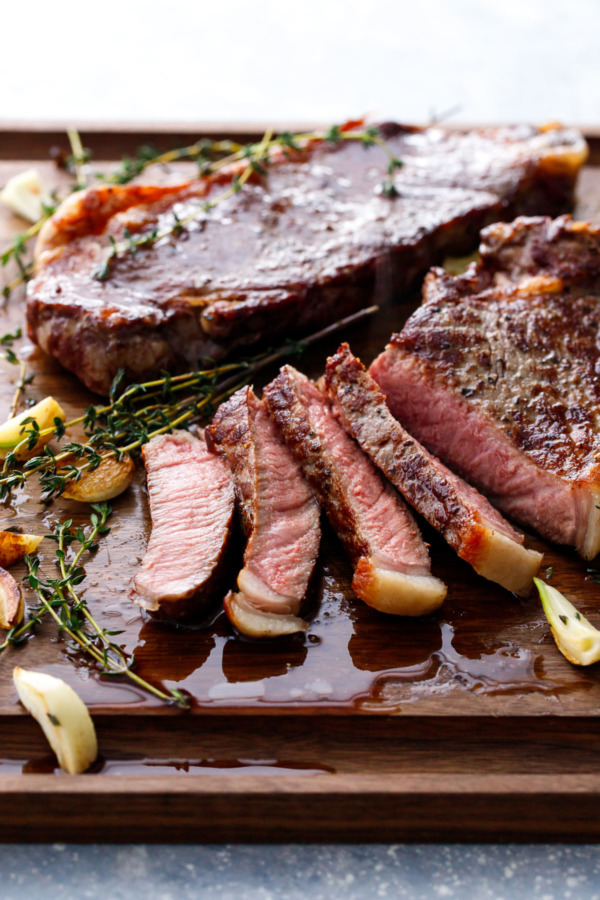
Reverse Sear Steaks are tender, juicy and perfectly pink all the way through.

Now, it might take a few tries at this before you find your optimal temperature. The ‘perfect’ temperature for you will probably different than ours, it just depends on how you like your steak.

Traditional guidelines say to cook a steak to 125 degrees F for medium. With the final sear at the end of this process, however, we found that stopping 5-10 degrees short of this to be just right. For us, 115-118 produced a perfect medium. If you like your steaks a bit more medium-rare, 108-110 or so would be ideal.

Cooked in this fashion, a good piece of meat needs little more than a sprinkling of salt and pepper (sound familiar? Our favorite oven-roasted chicken breasts are similar in that regard). We did choose to add some fresh thyme and garlic cloves at the very end, just for a bit of added color and interest.

(more…)


from Love and Olive Oil https://ift.tt/2GZ4sNg

Jackfruit BBQ Sandwich

10 Green Food Recipes

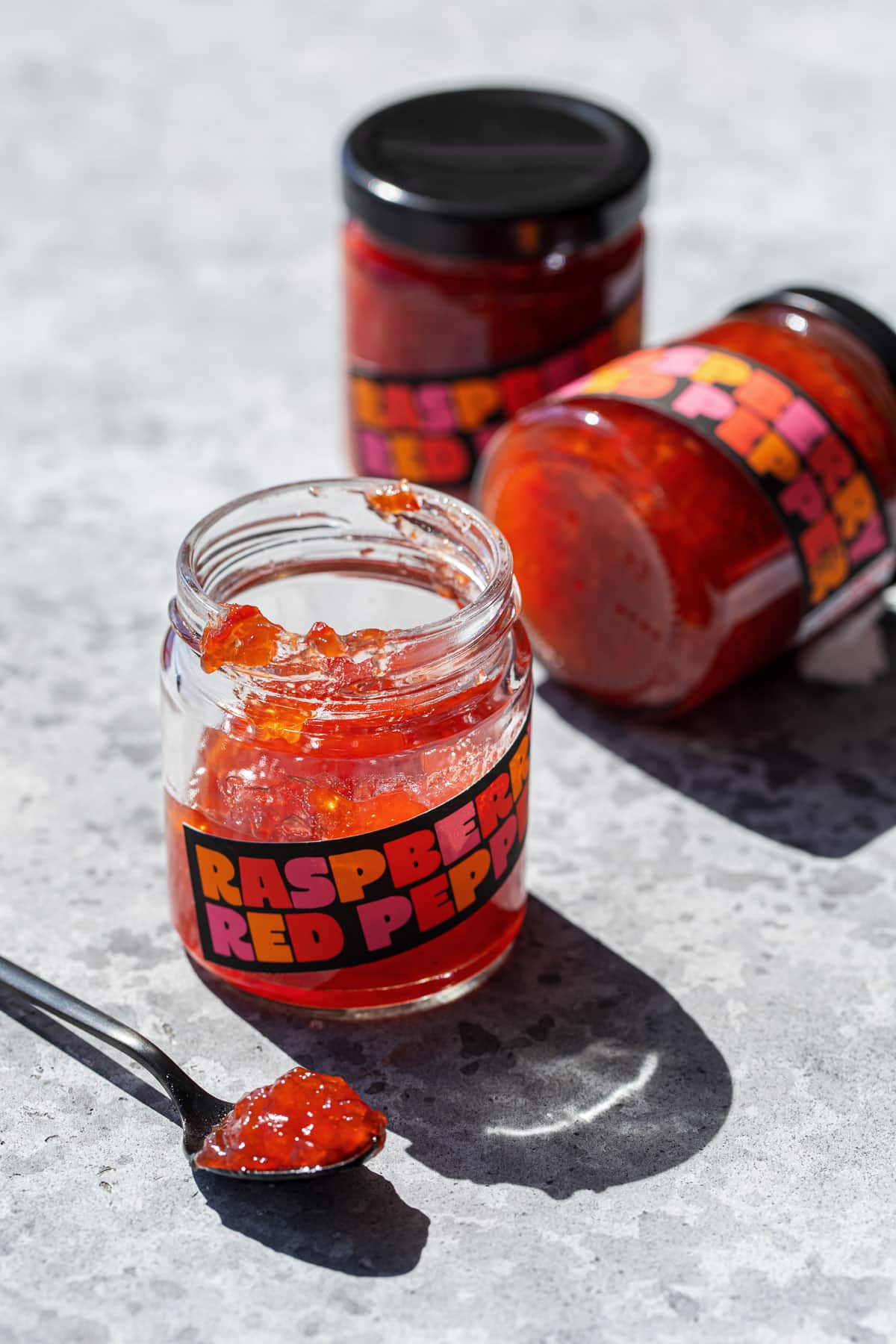
Raspberry Red Pepper Jelly

Sweet and spicy and fruity: that’s what this jelly is made of! With just the right amount of spice, balanced with sweetness and fruitiness ...