Top Food Trends 2019

From indigenous African foods to fermented beverages to exotic ice creams, here is some of what we’ll see in the coming year.

Health benefits, global tastes, and sustainability will drive more food and beverage trends over the next 12 months, according to predictions by the Specialty Food Association’s Trendspotter panel. The plant-based wave, upcycled foods, and cannabis-infused products will continue their trajectory, but branch off into new categories and in some cases intertwine in 2019, says the panel, a group of buyers, chefs, culinary education professionals, and industry watchers. 

Take a look at their trends and predictions on the following pages.


The Panel

Polly Adema, PhD, director & associate professor, Food Studies, University of the Pacific San Francisco Campus
Melanie Zanoza Bartelme, global food analyst, Mintel
Ken Blanchette, QA director fresh departments, Center of Excellence, FreshDirect
Jonathan Deutsch, PhD, professor, culinary arts and food science, founder and director of The Drexel Food Lab, Drexel University
Kara Nielsen, vice president, Trends & Marketing, CCD Helmsman
Melina Romero, manager, Trend Practice, CCD Helmsman
Stan Sagner, writer and producer
Tu David Phu, chef
Kriti Sehgal, CEO, Pure Fare
Izabela Wojcik, director of house programming, James Beard Foundation


1.Plant-based blossoms into a movement
The plant-based groundswell has cemented itself into the way people eat—stretching beyond vegetarians and broadly appealing to consumers intrigued by its health benefits and concerned about how their food is sourced. Makers are creating new product categories and disrupting old ones with plant-based options. The movement will become situated in the larger context of sustainability, say the Trendspotters. Look for it to become intermingled with upcycled products as more companies turn to root-to-stem ingredients to combat food waste. We’ll see more items like snacks made from rescued bananas or flours made with spent grains or pulp. In addition to continuing product rollouts in snacks, and as dairy- and protein-alternatives, plant-based foods’ rise across the foodservice sector will be significant in 2019, says the panel.


2. Palates shift to regional cuisines of Africa, South Asia, and Latin America
Much has been said about younger generations’ unprecedented exposure to global culture and cuisine from a young age. These consumers are adventurous and seek experience in their travel and in their food, which has led to a shift in interest to the regional fare of less-explored areas. Flavors and indigenous African foods from all over the continent are gaining a following including fonio (West); Nitter kbeh (East); ras el hanout (North); and biltong (South). New regional South Asian cuisines are emerging and Ayurvedic products—primarily whole or minimally processed foods—are on the radar. Savory-sweet bites in the street-snack tradition of these countries will become more popular. Expect to see new menus and packaged foods touting the regional flavors and ingredients of Mexico and Central and South America, from heritage corn tortillas to the advent of mezcal as a spirit and an ingredient.


3. Cannabis across multiple categories 
Last year saw the emerging cannabis segment gain a foothold in snacks and treats, as more states legalized sales of hemp-derived CBD products. Though the segment has its challenges as cannabis is still illegal at a federal level, consumer curiosity has been piqued (see story, p. 84). Factor in that a new generation is growing up in states where cannabis is legal, and signs point to future growth of the edibles segment. New products are rapidly hitting the market, many with high-end beautiful packaging and savvy marketing. Look for more infused cooking oils, coffees, teas, chocolates, baked goods, snacks, and even beer and pasta to hit the market in the coming year as well as more cannabis cuisine menus and cocktails at foodservice.


4. Packaging takes center stage— in the environment and consumer communication 
Packaging that helps inspire trust in the product through the quality and values it conveys will be more visible in the coming year. Consumers are placing a premium on company values, and producers are making more prominent on packaging their certifications/accreditations from B Corp to women-certified to animal welfare to social justice and more. Sustainable packaging will grow, especially plant-based varieties, say the Trendspotters. Expect to see some made of upcycled ingredients or scraps. For example, research is advancing the use of tomato peels, kelp, and mushrooms into sustainable alternative coatings and other packaging materials.


5. Cassava

A specific star of the plant-based phenomenon is cassava, also known as yuca, a starchy tuberous root native to South America. Grain- and gluten-free, the cassava root is high in carbs, but its leaves are a reported good source of protein and rich in lysine. Cassava leaves have been especially evident in packaged snacks from cassava leaf chips to popped cassava to even a cassava leaf jerky. While many products so far are packaged for retail, the Trendspotters predict seeing more cassava on foodservice menus as well in 2019, likely in baked goods or tortillas made with cassava flour.


6. Fermented functional beverages
Refrigerated RTD functional beverages have grown 20 percent in retail sales, according to SFA’s State of the Specialty Food Industry research. Probiotic-friendly kombucha has led the charge and more fermented functional beverages are coming that tout health, tradition, and flavor. Look for mushroom brews highlighting varieties like chaga, a nutrient-dense mushroom linked with antioxidants and cholesterol-lowering benefits; lion’s mane, reported to have anxiety-reducing and heart health benefits; and cordyceps, which may help with anti-aging as well as diabetes prevention and heart health. Drinking vinegars, which are high in probiotics, amino acids, and antioxidants, will also continue to rollout. And watch for kvas, says the Trendspotter panel. This traditional Slavic and Baltic fermented grain beverage is commonly made from rye bread and flavored with fruits or herbs like mint.


7. Edible beauty
Cited as emerging by last year’s Trendspotter panel, collagen is a full-fledged trend in 2019 and part of a bigger move to develop products that promote skin health and appearance. Collagen is being infused into beverages, snack bars, and even wraps to help replace diminishing levels as consumers age. And now more food products containing argan and almond oils are coming to market. Both oils are high in omega fatty acids and vitamin E which can help hydrate skin, restore elasticity, and reduce the visibility of wrinkles. Traditionally used topically, more cooking oils or products like almond butter made with argan oil are hitting shelves. While marketed broadly, many of these products are targeted at aging, and often overlooked Gen Xers.


8. Ice cream renaissance
We all scream for ice cream and now this traditional favorite has been rethought in function and flavor. Its reinvention started with dairy-free varieties made with coconut, almond, or soy milk. Then Halo Top entered the scene with its high-protein, low-calorie product that others are emulating. Now makers are blurring the lines between treat and healthier snack even further with some blending vegetables like cauliflower and carrots into ice creams. But it’s not all about health—boutique local creameries like Ample Hills and Graeter’s, known for local, hand-crafted, and indulgent ice creams are expanding nationally. And on the flavor front, global and floral notes like black sesame and jasmine are adding an exotic touch. Look for innovations to continue to drive the category, including advances in the non-dairy segments. For example, a dairy-free ice cream made from persimmon pulp is about to launch in New Zealand.


Denise Purcell is editor of Specialty Food Magazine.


from Food Trends http://bit.ly/2SGXqiv

Category Education: The Buzz About Cannabis: What Buyers Should Know

Hemp-derived products gain traction at retail as consumers seek anti-inflammatory benefits. 

Specialty food retailers seeking to break into the booming market for cannabidiol—better known as CBD—can be forgiven if they are a little dazed and confused. Products containing CBD and other compounds derived from the cannabis plant have been proliferating at retail outlets around the country, but a patchwork of state regulations and federal actions have created what some see as a gray area of legality surrounding the items.

Among the cannabis compounds, called cannabinoids, is tetrahydrocannabinol (THC), which is the psychoactive agent that gives marijuana users a “high.” Products containing THC are illegal under federal law but have been legalized in a handful of states around the country for either medicinal or recreational use, or both.

Such THC products are only available through licensed dispensaries. However, the dozens of other cannabinoids, which have been said to provide a range of health benefits, have been widely accepted to be fair game for sale by retailers—provided they are derived from industrial hemp plants, which are cannabis plants that have been bred to contain only trace amounts of THC. Several states have specifically legalized the sale of hemp-derived CBD products.

Products containing CBD and other cannabinoids have been appearing on store shelves around the country in the form of oral supplements, topical applications, and in various edible forms that include chocolate, candies, and other snack foods, as well as coffee and tea.

“The sky’s the limit—almost anything you can infuse, you are seeing infusions of,” says Rob Eder, founder of Firpo Productions, and a retail consultant specializing in cannabis products.

Eder recently moderated a symposium for retail buying platform ECRM on the topic of hemp-derived CBD products. He is also a cannabis entrepreneur who is developing a monthly subscription box called Leafed, which he describes as a “multisensory experience curated around a specific strain of the very best cannabis that’s available in a specific state.”

He says the edibles category has been strong in the adult-use (THC) cannabis market and has potential in hemp-based CBD products as well. In marijuana dispensaries, 22 percent of the volume has been in edibles, says Eder, citing data from research firm BDS Analytics.

According to the Hemp Business Journal, sales for the U.S. hemp industry rose 16 percent to $820 million in 2017, including $190 million for hemp-derived CBD products, $181 million for personal care products, and $137 million for hemp food products, led by the snack food category. Hemp food products include hemp hearts, which are the nutrient-rich seeds of the hemp plant and have been widely available in natural food stores for years.

A new report from consulting firm A.T. Kearney found strong consumer interest in non-psychoactive, cannabis-derived products, especially edibles. More than half of consumers surveyed (55 percent) in the U.S. and Canada said they would be interested in trying infused items such as chocolates, candies, and other packaged foods, and nearly a third—32 percent—said they would be interested in infused non-alcoholic beverages.

Strong Sales at Alfalfa’s

Alfalfa’s, a natural foods retailer in Boulder, Colo., has been merchandising CBD products for the past three years, says Betty Bailey, wellness manager for the two-store operator.

“It’s been really good for us,” she says. “It’s definitely one of the leading categories for us in terms of sales.”

Alfalfa’s has been focused on offering full-spectrum liquid extracts (which contain all the cannabinoids in industrial hemp plants), she says, noting that most manufacturers have shifted away from the CBD-only label on hemp-infused items.

The retailer also carries a range of infused topical products, including balms, salves, and creams, as well as such infused edibles as caramels, chocolates, coconut snacks, honey, and coffee. The items are touted as having a range of health benefits, but customers are often interested in addressing the discomfort caused by inflammation, Bailey says.

One of the brands Alfalfa’s carries is Weller, a locally based manufacturer of Coconut Bites with hemp extract. Weller describes the product as containing 5 milligrams of “full-spectrum hemp extract in every bite.” The company’s hemp-infused Coconut Bites come in original, dark chocolate, and caramel flavors.

The hemp-infused coffee Alfalfa’s carries also is produced locally, by a company called Restorative Botanicals, which offers an organically grown Peruvian coffee product infused with a full-spectrum hemp oil extract from Colorado.

“They’re doing a really smart extraction method where they’re actually infusing during the roasting process so the hemp is driven into the bean,” says Bailey. “It’s definitely one of the most effective techniques I’ve seen for a coffee.”

Alfalfa’s also carries a locally produced honey that is infused with hemp, from Frangiosa Farms. The Colorado Hemp Honey comes in 12-ounce jars containing 1,000 milligrams of “full spectrum hemp extract,” and is available in three varieties: Raw Relief, Tangerine Tranquility, and Lemon Stress Less.

“We focus primarily on local in general as a company and store, but also especially when it comes to hemp products, just because we have so many people doing it so well in their backyard,” says Bailey. “Colorado’s leading the way and has paved quite a solid path for the hemp industry.”

Focus on Quality 

Linda Gilbert, managing director of consumer insights, BDS Analytics, says that specialty food retailers need to pay close attention to the quality of the infused products they may be bringing into their stores.

“The first rule of thumb is to be loyal to the practices that have made you successful to-date,” she says. “That means in most instances putting an emphasis on taste and putting an emphasis on that variety of experience that specialty foods bring to people.”

She says there are “a lot of challenges with infused edibles” because the compounds can sometimes be bitter or can impart a gritty texture.

“You really need to do your homework, and make sure that you’re delivering the quality of product that people have come to expect from your brand,” she says. “Just because it has cannabis in it, or hemp in it, or CBD in it, doesn’t mean that people are willing to have a chocolate bar that’s gritty.”

Products need to focus on communicating the experience that the products will produce, rather than the actual science around it, Gilbert explains.

“Is it going to give me energy or help me to sleep? Is it going to relax me or give me that extra edge I need to get through my power walk? It goes back to when we started fortifying foods,” she says. “Consumers don’t want to understand the science of calcium. They want to know that if I drink this, it’s good for my bones.”

Gilbert also suggests that retailers should pay close attention to the experience and skill sets of their suppliers.

“To paraphrase what someone once said to me, ‘The ability of a marijuana or hemp producer to make a fine chocolate is probably far less than the ability of a fine chocolatier to develop an infused chocolate,’” she says.

Gilbert sees ample opportunity for hemp-infused edibles. Many of the products available today are candies and sweets, she says, but consumers may also be interested in a range of savory items as well.

She says she expects a range of suppliers to get on board with these types of products, or to at least explore the opportunities.

“We are going to see everything from startups to very well-established, mainstream companies start to look at this,” she says. “They’re already looking at it. Some are going to decide, ‘It’s not for us.’ Some are going to decide, ‘There’s opportunity for us here.’

But you would almost be negligent or irresponsible today to not be looking at it. It might not be right for you, but you ought to be looking at it.” 

Hemp Grows in a Legal Gray Area

Daniel Shortt, a Seattle-based attorney with law firm Harris Bricken who works extensively with entrepreneurs in the cannabis industry, says that specialty food retailers who offer CBD or hemp-infused products need to be sure that the suppliers they are buying from are sourcing their products from industrial hemp.

However, some confusion still exists around the legal definition of industrial hemp, he says. He also notes that some federal authorities issued a statement of principle in 2016 that the 2014 Farm Bill—which legalized the cultivation of industrial hemp—did not allow the commercial sale of industrial hemp products, nor did it allow the interstate transfer of industrial hemp. However, Congress has prohibited the enforcement of that interpretation, Shortt explains.

“Businesses are creating these CBD products from industrial hemp, and for a buyer of specialty foods who’s looking into CBD, it’s important that that buyer is assured that the product is, in fact, derived from industrial hemp and has documents and evidence to support that,” says Shortt.

The 2018 Farm Bill is expected to include the Hemp Farming Act of 2018, which would remove hemp as a controlled substance, formally allow CBD to be sold legally in all 50 states and, observers say, open up the industry to robust market development. 

Cannabis Brings Marketing Challenges, Branding Opportunities

Chris Epp, who oversees marketing at Boulder, Colo.-based Alfalfa’s, says marketing hemp-based products can be a challenge. Much of the retailer’s marketing has been conducted in-store and through direct email outreach.

“The hurdle we keep running into is that most of the larger media companies will not allow you to advertise for anything that says ‘hemp’ or ‘CBD,’” says Epp. “You can’t post on Facebook, you can’t use Google Ad Words or any of the traditional or obvious methods to market these things.” 

The reluctance on the part of large media companies to carry hemp or CBD advertising could reflect the fact that the legal status of these products has varied by state and has been in a state of flux.

Consultant and cannabis entrepreneur Rob Eder, founder of Firpo Productions, says brand names are an important element of marketing in the cannabis market.

“Brands really matter in this space, whether you are talking about cannabis or CBD specifically,” he says, noting that several celebrities—including Jimmy Buffet, Snoop Dogg, Willie Nelson, Whoopi Goldberg, Tommy Chong, and Melissa Etheridge—have jumped into the space.

“There’s a tribalism in this business,” says Eder. “People are gravitating toward brands that resonate with them.”

Singer-songwriter Etheridge has been marketing a range of cannabis-infused products in California for several years through the Etheridge Farms label. Among the recent introductions is a cannabis-infused wine, available only through licensed dispensaries. 


Glossary

THC, or tetrahydrocannabinol, is a cannabis compound that is the psychoactive agent. In other words, this is what gives marijuana users a “high.” Products containing THC are illegal under federal law but have been legalized in a handful of states around the country for either medicinal or recreational use, or both. Such products are only available through licensed dispensaries.

CBD, or cannabidiol, is a cannabis compound that can be derived from marijuana or from hemp oil. CDB found in edibles is derived from industrial hemp plants, cannabis plants that have been bred to contain only trace amounts of THC. Several states have specifically legalized the sale of hemp-derived CBD products.

Hemp is derived from the stalks and seed of the cannabis crop. For cannabis to be considered hemp, it must have no more than 0.3 percent THC. Hemp oil also only has traces of CBD. Hemp products are widely available, especially in natural food stores.


Mark Hamstra a regular contributor to Specialty Food Magazine and Specialty Food News.


from Food Trends http://bit.ly/2sifJz7

Product Roundup: Plant-Based Dairy

The descriptor “plant-based” is popular these days and has done a great job with changing the narrative surrounding animal-free foods.

Plant-based foods are nutritious, protein-packed, and often quite tasty. Plant-based dairy products are having a moment right now because the messaging isn’t about leaving animals out, it’s about being able to indulge without guilt. If you’re on a plant-based diet or dairy doesn’t agree with you, you can have your kefir, milk, cheese, even your ice cream, dairy-free. Following are some new, plant-based dairy products on store shelves today.


Field Roast Vegan Chao Slices—Tomato Cayenne. Coconut-based and seasoned with fermented tofu, Field Roast Vegan Chao Slices are dairy-free, yet they peel easily, shred well, and melt like a dream. Field Roast Tomato Cayenne slices are made with a hint of tomato and complemented by Bell peppers and cayenne, making for a sharp and spicy cheese. They are vegan and gluten-free, and work well melted over chili dogs, crispy tater tots, or mixed with a meat or meat substitute for queso con carne. fieldroast.com


Follow Your Heart Vegan Cheese—Smoked Gouda. Elevate your cheese party with this hickory-smoked Gouda. Follow Your Heart Smoked Gouda Vegan Cheese is gluten-free, dairy-free, non-GMO, and soy-free, but still has the creamy and authentic cheese flavor and texture of real cheese. Pair Vegan Smoked Gouda slices with caramelized onions for a gourmet panini, or add to mac ‘n cheese for a sophisticated take on the American classic. followyourheart.com


Incredible Foods Salted Caramel and Vanilla Frozen Bites. These non-dairy frozen bites are free from the big eight food allergens. The taste of melt-in-your-mouth salted caramel and vanilla is the perfect balance of decadence and delight without the guilt. Frozen Bites utilize Incredible Foods’ proprietary encapsulation technology that mimics nature, just like the skin of a grape or other fruits, allowing for versatility when it comes to flavor and form, as well as a unique eating experience that makes for a novel frozen finger food. incrediblefoods.com


Los Chileros CO YO Mixed Berry Yogurt. This coconut yogurt is made with coconut cream and plant-based probiotic cultures, and is full of vitamins C, E, B1, B3, B5, and B6. It is dairy-free, gluten-free, soy-free, and 100 percent vegan with no added sugar. Additional coconut yogurt flavors include mango and raw chocolate. coyo.com


Melt Rich and Creamy Organic Buttery Spread. Melt Organic is made from a blend of fruit- and plant-based oils, such as organic virgin coconut oil, organic flaxseed oil, organic palm fruit oil, organic canola oil, and organic hi-oleic sunflower oil. It cooks, bakes, and melts just like butter, with half the saturated fat and fewer calories. It is USDA certified organic, Non-GMO Project Verified, Fair Trade certified, and kosher. Additional products from Melt include Melt Probiotic Buttery Spread and melt Vegan Butter Sticks. meltorganic.com


MUD Vanilla Coconut Mousse. MUD Coconut Mousse is the first plant-based frozen dessert made with no processed sugars or additives. It is cold, creamy, and rich in taste and nutrients. Made with a base of coconuts and cashews, it is whipped into a creamy texture and sweetened only with dates. MUD Vanilla Coconut Mousse is dairy-free, gluten-free, soy-free, paleo-friendly, and non-GMO. Additional flavors of mousse include chocolate and coffee. eatmud.com


Neoliv Chocolith Vegan Gelato. This raw, vegan gelato has no added sugar or sweeteners. Made for the “modern crave-man,” Chocolith gelato is gluten-free, low calorie, and has a low glycemic index. It is made with only five ingredients: organic dates, organic coconut milk, organic coconut cream, raw cacao, and organic coconut water. neolivfoods.com


nutpods Peppermint Mocha Creamer. Shelf-stable, unsweetened dairy-free Peppermint Mocha Creamer is made from almonds and coconuts, making it an ideal plant-based alternative to half and half. Peppermint Mocha is rich and creamy, giving consumers the opportunity to create their own seasonal cup of coffee or tea, or an extra creamy hot chocolate filled with winter flavors. It is free from dairy, soy, added sugar, gluten, and carrageenan. Additional nutpods flavors include Original, French Vanilla, Hazelnut, Vanilla Lemon, and Pumpkin Spice. nutpods.com


Oatly Chocolate Oat Milk. A childhood favorite without the milk, Oatly’s Chocolate Oat Milk is full of oats instead, which contain protein, carbs, fibers, and healthy fat. It’s also enriched with calcium and vitamins to provide the same nutritional value as traditional milk. Pour over a bowl of morning muesli, or drink on its own for a chocolatey treat. The rich, chocolatey flavor is UTZ certified, ensuring it is subjected to sustainable farming practices. Additional offerings available in the U.S. include the original Oatmilk, Low-Fat Oatmilk, and Barista Edition Oatmilk. oatly.com


Ruby Rockets Stellar Strawberry Non-Dairy Frozen Pops. These non-dairy frozen pops are a unique, better-for-you frozen pop that is a creamy alternative to yogurt. They are dairy-free, made with no added sugar, and have 2g of plant-based protein. Made with organic, non-GMO ingredients, these frozen pops are gluten-free, vegan, and kosher. Ruby Rockets Frozen Pops are made from fruits, vegetables, creamed coconut, chia seeds, and pea protein, and are an excellent source of vitamin A. rubyrockets.com


Sara Kay is content and education specialist for the Specialty Food Association. 


from Food Trends http://bit.ly/2H1p20D

Buyers’ Picks: Valentine’s Fare

Food gifts with whimsical and artsy packaging and sweets and savories for the dinner table from near and far, are Valentine must-haves, say specialty food buyers. 

Hunter Fike, DiBrunoBros., Philadelphia, PA

  • Di Bruno Bros Black Lava Cashews
  • Mitica Piedras de Chocolate
  • Parmigiano Reggiano
  • Trüff Truffle-Infused Hot Sauce 
  • Wa Imports Black Garlic Molasses

Jana Werner, Market Hall Foods,
Oakland, CA

  • Acetaia Leonardi Balsamic Condiment Fine Heart Serie 5
  • Acetaia Leonardi Beatrice & Dante Balsamic Vinegar IGP
  • Eros Tea by Mariage Frères
  • La Maison Du Piment Sweet Basque Cherry Confit
  • Masseria Mirogallo Diavolicchi Hot Peppers in EVOO
  • Seka Hills Arbequina EVOO 

Ray Phelps, Above All Vermont,
Manchester, VT

  • April’s Maple Dark Cocoa Maple Cream Truffles
  • Dorset Maple Reserve Bourbon Barrel-Aged Maple Syrup
  • However Wild Farm Vermont Comb Honey
  • Potlicker Kitchen Pineapple Habanero Jam 
  • Tout De Sweets Black & Tan Sea Salt Caramels

“Customers should look for hostess gifts with a wow factor to make ordinary recipes seem special. Think truffle infused hot sauce atop raw oysters or molasses with underlying garlic umaminess drizzled over cheese.” 
—Hunter Fike, DiBruno Bros., Philadelphia, PA


Kevin Heald Malt & Mold, NYC

  • Eat This Yum! Strawberry, Lavender Lemon Zest Preserve
  • Boxcarr Handmade Cheese Cottonbell for Valentine’s 
  • Casella’s Prosciutto 
  • Tia Lupita Hot Sauce Red, Green or Chipotle
  • The Truffliest Truffle Honey

“Celebratory food gifts that deliver quality and value—like chocolate, caviar, and Champagne coupled with a fancy cheese board with balsamic-drizzled fresh fruits and nuts—are exceptional Valentine’s fare.”
—Evelyn Ignatow, Hyde Park Gourmet, Cincinnati, OH


Evelyn Ignatow, Hyde Park Gourmet, Cincinnati, OH

  • Bon Courage French Chocolate Truffles
  • Brillat Savarin Triple Cream Cheese
  • John Kelly Chocolates Salted Caramels Vanilla Butter with Fleur de Sel
  • Kitchen28 Those Nuts!
  • Marky’s Caviar (Oscetra, Paddlefish, Hackleback) 
  • Veuve Clicquot Rose 
  • Villa Manodori Aceto Balsamico di Modena

Jenn Fox, Dash of Thyme, Denville, NJ

  • Dash of Thyme Aged Dark Chocolate Balsamic 
  • iKenbee Honey 
  • The Republic of Tea Raspberry Rose Hibiscus Tea 
  • Stonewall Kitchen Raspberry Syrup
  • Stonewall Kitchen Traditional Crepe Mix

Sylva Lin, Culinary Architecture,
Baltimore, MD

  • Big Picture Farms Caramels 
  • Honey Mama’s CocoaNoNut Bar
  • M.F.G. Toffee Co. English Walnut Toffee 
  • TBJ Classic Uncured Bacon Jam
  • Van Leeuwen Ice Cream Vegan Chocolate

Jim Miller, Fig & Julep, Tampa, FL 

  • Fig & Julep Chocolate di Torino Balsamic
  • Italian Harvest - Marella Cuori Multicolored Hearts Organic Pasta
  • Sugarfina Single Malt Scotch Cordials 
  • Ritrovo Selections Casina Rossa Sugo al Pomodoro Puttanesca 
  • William Dean Chocolates

Nicole Potenza Denis is a contributing editor to Specialty Food Magazine.


from Food Trends http://bit.ly/2sh7of0

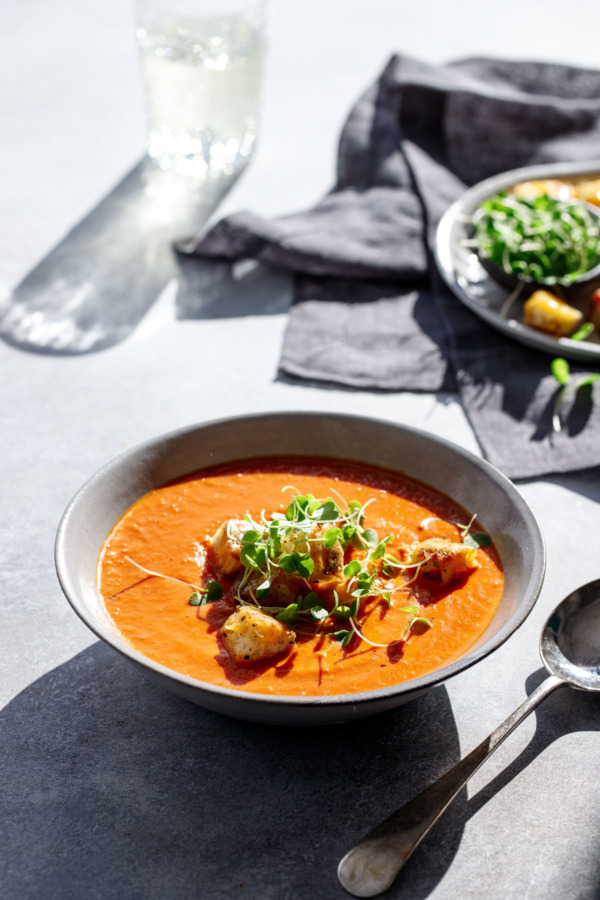
Winter Tomato Soup with Cheesy Croutons

The ultimate in winder comfort: this ultra creamy tomato soup is made from canned tomatoes and dried spices, all ingredients you should already have in your pantry!

Tomato season never quite aligns with tomato soup season, those wintry days when you’re craving a big old bowl of comfort. In fact, it’s completely opposite. Which is why when winter comes around, canned tomatoes are the key to this comfort food classic.

Winter Tomato Soup Recipe with Cheesy Croutons

We’ve already shared our favorite summer tomato soup recipe, packed with vine-ripened heirloom tomatoes. There are few things better than a perfectly ripe summer tomato, and this soup showcases that summer sweetness perfectly (the finishing dollop of mascarpone doesn’t hurt, either).

But why shouldn’t you be able to enjoy comforting tomato soup year round, and not just in July and August when the tomatoes are at their peak. I mean, chilly January days are when I really crave the comfort and warmth of a big bowl of tomato soup, so we set out to make a off-season version using canned tomatoes and dried spices.

When tomatoes aren’t in season, you’re better off buying canned anyway, as they are going to be much more robust and flavorful than those pale, flavorless things in the market this time of year. Just say no to winter tomatoes.

(more…)


from Love and Olive Oil http://bit.ly/2CTEiZ3

Homemade Acai Bowl Recipe

28 Day Healthy Meal Plan

Looking for a healthy weekly meal plan? Here’s a 28 day healthy meal plan with planning ideas and a meal planning calendar with food to cook.

Are you overwhelmed by what healthy food to cook but don’t know where to start? Alex and I were there when we first got married! But over the last 10 plus years, we’ve invested a huge amount of time and energy into a system of eating healthy that actually works. Since then, we’ve become authors of the cookbook Pretty Simple Cooking, named one of the best healthy cookbooks of 2018 and best vegetarian cookbooks. We’ve cooked everywhere from our home kitchen to the TODAY Show with the message that healthy eating can be “pretty simple”. Healthy eating is more than just making a recipe here and there: it’s finding a sustainable practice. The goal of this healthy weekly meal plan is to help you find a handful of favorite healthy recipes that you can make again and again! If you’d like, subscribe to our newsletter for new weekly recipes.

Related: 28 Day Vegetarian Meal Plan | 28 Day Vegan Meal Plan

Is this healthy meal plan right for you?

This healthy meal plan is right for you if you eat a variety of foods, but want to eat healthier and eat more vegetables! The recipes in this healthy meal plan include fish, shellfish, vegetarian, and vegan recipes. If you are vegetarian and vegan, head to our 28 Day Vegetarian Meal Plan and 28 Day Vegan Meal Plan.

If you have a very specific diet or health condition, consult a medical professional to understand whether these recipes are right for you.

The problem with meal planning calendars

For Alex and me, the problem with meal planning calendars and weekly meal plans is that they offer no flexibility. Most meal plans we’ve found call for cooking something new every day of the week. They’re overwhelming with the amount of food prep that they call for! They also don’t account for your schedule: what if Monday nights I have a weekly meeting where I eat dinner? Or this Friday night I’m going out with friends?

Here’s what makes our healthy meal plan different:

  • Spotlight dinner ideas. For us, dinner is our main meal where we cook and get the majority of our nutrients for the day. Our approach is to go big on dinner, and then do super simple things for breakfast and lunch. That’s what works for us! At the bottom of the meal plan you’ll find lists of healthy breakfast ideas, snack ideas, and lunch ideas. You can use these, or find others that fit your tastes.
  • Pick 3. Each week, we offer 3 healthy dinner ideas. You can make them on any day that week! This encourages you to customize the ideas based on your schedule and particular tastes. It also encourages eating up leftovers.
  • Repeats. Since we only offer 3 dinner ideas, this also encourages you to make dinner ideas you liked from previous weeks.

What if this meal plan doesn’t work for me?

It’s possible this meal plan might not work for you–and that’s ok! This meal plan might provide too much flexibility for you and not motivate you to make the recipes. Or, you might not like the style of these recipes. (If you eat a vegetarian or vegan diet, you’ll want to use our 28 Day Vegetarian Meal Plan and 28 Day Vegan Meal Plan). We know this meal plan is not for everyone, but this is an outline of how Alex and I cook on a weekly basis.

Download: Healthy meal plan spreadsheet

To make our Healthy Meal Plan tangible, we’ve created a downloadable meal planning calendar for you! It’s our Healthy Meal Plan spreadsheet, where you can copy in your meal planning ideas for each week. Simply download the spreadsheet and then copy in the links to the recipes for each week below! Here’s an example of one that’s filled out.

Healthy Meal Plan

Before you start: here’s how to use our Healthy Meal Plan!

  • Pick at least 3 dinner ideas. Confession: Alex and I don’t cook every night! We make enough for leftovers and eat them throughout the week too, sometimes re-purposing them in new ways. For this meal plan, pick 3 days that you want to cook dinners. Fill in the other days with eating leftovers, doing “clean out the fridge” meals without recipes, and allow for meals out. If you end up needing more healthy dinner ideas for that week, skip ahead to the next week and try one. (Or, pick one of our other Dinner Recipes!)
  • Fill in breakfast, lunch, and snacks ideas. We focus on dinner as the main daily meal, so we keep breakfast, lunches, and snacks SUPER simple. If possible, we love things that don’t use recipes (like English muffins with peanut butter, yogurt with fruit). That way, we save our cooking energy for dinner.
  • Copy the links into your Healthy Meal Plan spreadsheet. Using a spreadsheet makes things much more tangible than just using a list! Once you’ve taken stock of what your week holds and what nights you’ll have time to cook, fill in your dinner ideas accordingly. We suggest filling out the meal plan on the weekend (Sundays seem to be good for many people).
  • Read the meal prep planning notes. Below each week of healthy dinner ideas, we’ve included some meal prep planning notes to help with ways to make ahead or prep in advance.

28 Day Healthy Meal Plan | healthy weekly meal plan | Meal planning ideas | Meal prep plans | Meal planning calendar

Veggie Burrito Bowls with Cauliflower Rice

Healthy Dinner Ideas Week 1

*Pick at least 3 dinners to cook at home and copy them into your Healthy Meal Plan spreadsheet on the days for Week 1! On days you’re not cooking, use up leftovers or do “clean out the fridge” meals, and allow for meals out.

  1. Quick Garlicky Shrimp Couscous (15 minutes)
  2. 15 Minute Gnocchi with Romesco (15 minutes) + green salad with Super Simple Salad Dressing
  3. Chipotle Black Bean Tortilla Soup (35 minutes)
  4. Veggie Burrito Bowl with Cauliflower Rice (40 minutes*)
  5. Leftovers from above*

*Meal Prep Plan Notes

  • The Shrimp Couscous doesn’t require any advanced prep: it’s super quick!
  • For the Gnocchi, the Romesco sauce and be prepared in advance. You also may want to serve with a green salad; the vinaigrette is perfect to mix up in advance. Make sure to bring it to room temperature before serving.
  • The Tortilla Soup takes about 20 minutes of hands on time. If desired, you can make the tortilla strips in advance or use crushed tortilla chips (just find chips that are minimally processed, with a few ingredients like corn, oil and salt). You can make the entire soup in advance and refrigerate: the flavor gets better over time!
  • The Veggie Burrito bowl has a few components that are easy to make ahead: the peppers and onions can be sliced and cooked in advance. For the sweet potatoes, you could also bake in advance and reheat. If you can’t find cauliflower rice frozen, you can make it from raw cauliflower: you could also cook that in advance and reheat. The eggs are best to make the day of. While it takes a while to prepare the components, this meal is SO delicious and great for leftovers!

28 Day Healthy Meal Plan | healthy weekly meal plan | Meal planning ideas | Meal prep plans | Meal planning calendar

BBQ Bean Tacos with Pineapple Salsa

Healthy Dinner Ideas Week 2

*Pick at least 3 dinners to cook at home and copy them into your Healthy Meal Plan spreadsheet on the days for Week 2! On days you’re not cooking, use up leftovers or do “clean out the fridge” meals, and allow for meals out.

  1. BBQ Bean Tacos with Pineapple Salsa (25 minutes)
  2. Baked Salmon with Chimichurri Sauce (40 minutes*)
  3. Tuscan Soup with White Beans (30 minutes) + green salad with Super Simple Salad Dressing or Honey Mustard Vinaigrette
  4. Make again! 1 or 2 favorite dinner ideas from Week 1
  5. Leftovers from above*

Meal Plan Prep Notes

  • The Tacos are one of our simplest recipes: you simmer the beans in the time it takes to make the pineapple salsa. If desired, you can make the salsa in advance and slice up the garnishes. For a filling side, serve with rice (or to look fancy, turmeric rice).
  • The Salmon is very simple to prepare and bakes in just 10 minutes! If you’re serving with the chimichurri sauce, it can easily be made in advance and refrigerated until serving. If you’d like to serve with the roasted potato rounds, they can be made ahead and reheated in the oven with the salmon.
  • For the Soup, you can slice the fennel and chard in advance and refrigerate until making the soup; in this case we’d make the soup within a day or two of cutting the vegetables. While the soup simmers, you can whisk up the dressing for the salad. We like using boxed salad greens for easy prep.

28 Day Healthy Meal Plan | healthy weekly meal plan | Meal planning ideas | Meal prep plans | Meal planning calendar

Thai Sweet Potatoes with Peanut Drizzle

Healthy Dinner Ideas Week 3

*Pick at least 3 dinners to cook at home and copy them into your Healthy Meal Plan spreadsheet on the days for Week 1! On days you’re not cooking, use up leftovers or do “clean out the fridge” meals, and allow for meals out.

  1. Coconut Lentil Curry with Greens (30 minutes) + rice or quinoa
  2. Baked Shrimp with Tomatoes and Feta (30 minutes) + leftover rice or quinoa, couscous from Week 1, or bread
  3. Thai Sweet Potatoes with Peanut Drizzle (35 minutes)
  4. Make again! 1 or 2 favorite dinner ideas from Week 1 or 2
  5. Leftovers from above*

Meal Plan Prep Notes

  • For the Curry, you can make the lentils in advance, then saute the greens and add the sauce the day of serving. If serving with rice, you can make the rice in advance and reheat. Tip: To reheat the rice: place the rice in a saucepan with a splash of water and use a fork to break up any clumps. Heat over low heat until warmed through and moist. You can also serve with quinoa cooked on the stovetop or cooked in an Instant Pot. You can make the quinoa in advance or the day of; it takes about 25 minutes overall and requires no special reheating instructions.
  • For the Shrimp, if desired you could mince and dice the onion and garlic prior to serving and refrigerate. Serve with rice or quinoa (see above); you could use leftovers if you have them. Or make the Quick Couscous from Week 1, or serve with pita bread.
  • from Week 1.
  • For the Thai Sweet Potatoes, you can make the peanut sauce in advance. You could also slice the veggies for the slaw in advance and then mix it with the lime and seasoning prior to serving. If desired you can cook the sweet potatoes in advance and reheat: you can bake them or use an Instant Pot and the cook time is around 35 minutes.

28 Day Healthy Meal Plan | healthy weekly meal plan | Meal planning ideas | Meal prep plans | Meal planning calendar

Salmon en Papillote with Roasted Potatoes

Healthy Dinner Ideas Week 4

*Pick at least 3 dinners to cook at home and copy them into your Healthy Meal Plan spreadsheet on the days for Week 1! On days you’re not cooking, use up leftovers or do “clean out the fridge” meals, and allow for meals out.

  1. Greek Quesadillas (15 minutes)
  2. Salmon en Papillote with Roasted Potatoes (40 minutes)
  3. Cauliflower and Tomato Coconut Curry (35 minutes, plus rice)
  4. Make again! 1 or 2 favorite dinner ideas from Week 1, 2 or 3
  5. Leftovers from above*

Meal Plan Prep Notes

  • The Quesadillas require no advanced prep at all!
  • The Salmon en Papillote bakes for just about 10 minutes; the potatoes are what increase the prep time. You could roast the potatoes in advance and reheat in the oven prior to serving with the salmon.
  • For the Curry, you could chop the vegetables in advance and refrigerate until serving: in that case make the curry within about a day or two. Follow the rice and quinoa prep instructions from Week 3.

28 Day Healthy Meal Plan | healthy weekly meal plan | Meal planning ideas | Meal prep plans | Meal planning calendar

Cinnamon Pecan Muesli

Healthy Breakfast Ideas Weeks 1-4

Alex and I do really, really simple breakfasts that don’t require a recipe so we don’t have to think too hard in the morning. This frees us up to spend most of our creative energy on dinner. Pick any of these to eat throughout the week and copy them into your Healthy Meal Plan spreadsheet (or if you prefer, don’t use the spreadsheet at all). We’ve offered quite a bit of options to account for your breakfast tastes and style. Do repeats as much as you’d like!

Healthy Snack Ideas Weeks 1-4

Pick any of these to eat throughout the week and copy them into your Healthy Meal Plan spreadsheet (or if you prefer, don’t use the spreadsheet at all for snacks).

28 Day Healthy Meal Plan | healthy weekly meal plan | Meal planning ideas | Meal prep plans | Meal planning calendar

Healthy Lunch Ideas Weeks 1-4

Lunches can be hard, especially if you’re eating at your desk! Again, Alex and my philosophy for lunches are to keep them super, super simple, without a recipe if possible. Pick any of these to eat throughout the week and copy them into your Healthy Meal Plan spreadsheet (or if you prefer, don’t use the spreadsheet at all for lunches).

Did you like this healthy meal plan?

We’d love to hear your feedback on this meal plan: let us know in the comments below. And let us know if you have any questions!

If you enjoyed the recipes in this plan, you might enjoy our healthy cookbook Pretty Simple Cooking!

A Couple Cooks - Healthy, Whole Food, Vegetarian Recipes


from A Couple Cooks http://bit.ly/2QjnONt

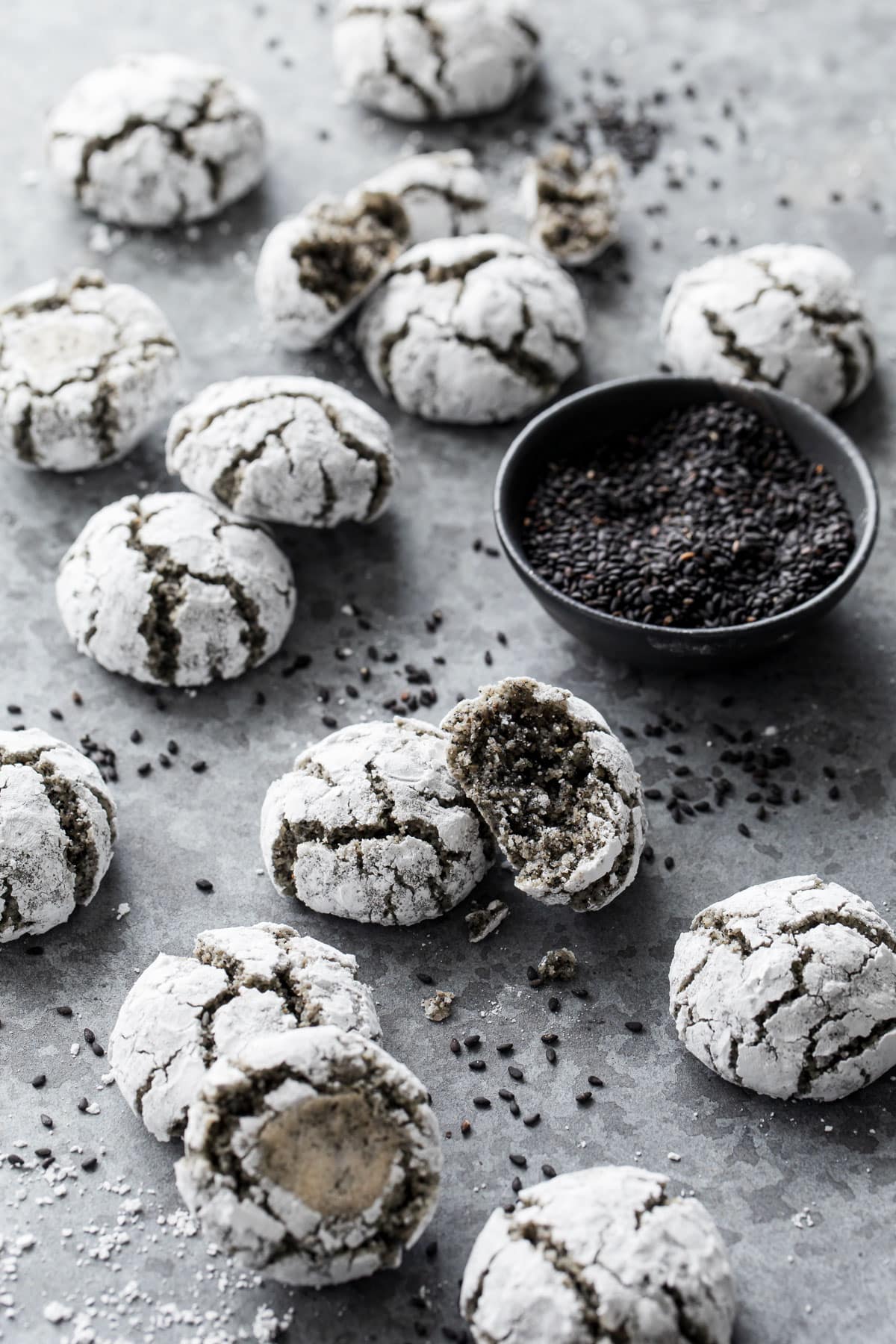
Black Sesame Amaretti Cookies

Amaretti are some of my favorite cookies for a reason: they are ridiculously simple to make, with only 3 main ingredients—plus the black se...