Posts


Buyers’ Picks: Most Important Meal of the Day

From the classically simple yogurt and granola to the deliciously decadent chocolate chip pancake, there is no shortage of choices when it comes to breakfast foods. Here are some product recommendations from buyers to make the day’s first meal, its best.
“April’s Maple Pancake Mix contains crunchy bits of crystalized maple sugar that caramelizes on the griddle. Drizzle syrup on top, and you’ve got a double dose of maple.”
—Amelia Rappaport, Woodstock Farmers’ Market, Woodstock, VT
Mari Geier, Nuts n’ Berries, Atlanta, GA
- Applegate Farms Chicken and Maple Breakfast Sausage
- Bob’s Red Mill Gluten Free Oatmeal Cup, Classic
- Nectar Ready to Blend Smoothie, Acai and Strawberries
Amelia Rappaport, Woodstock Farmers’ Market, Woodstock, VT
- April’s Maple Maple Crunch Pancake Mix
- Blake Hill Preserves Jam
- Granola from local companies like Back Roads, Quaker Hill, and True North
- Green Mountain Creamery Yogurt
- Green Mountain Smokehouse Bacon
- Vermont Creamery Cultured Butter
“Breakfast doesn’t have to be about dry cereal and milk anymore. There are so many new products that can provide a colorful and nutritious meal to start the day.”
—Mari Geier, Nuts n’ Berries, Atlanta, GA
Brandie Miller, Grocery Outlet, Emeryville, CA
- Birch Benders Pancake & Waffle Mix
- Bob’s Red Mill Oatmeal Cups
- Kodiak Cakes Muffin Cup Chocolate Chip
- Lakanto Sugar-Free Maple Syrup
Mat Pond, The Epicurean Trader, San Francisco, CA
- Flying Bird Botanicals Premium Culinary Matcha
- Nana Joes Granola Sunset Blend
- Seattle Canning Co. Uncle Winston’s Tomato Relish
- Shichi-mi togarashi, a Japanese spice blend
Tori Sickles, Sickles Market, Little Silver, NJ
- Balthazar Bread with Inna Jam
- Banner Road Baking Co. Granola
- Jonesbar Coconut Bar
- Mount Mansfield Maple Syrup
- Ronnybrook Farm Milk
- Stonewall Pancake Mix
Hunter Fike, Di Bruno Bros., Philadelphia, PA
- Artibel Fig Molasses
- Brins Cherry Chai Jam
- Copper Cow Coffee
- Il Colle del Gusto Pistacchiosa
- La Fermière Yogurt
- Sugar Bob’s Smoked Maple Syrup
“Forget maple syrup and make this tantalizing start to the day: Cherry Chai Ginger Pancakes. The jam would also work perfectly mixed into one of the La Fermière yogurts.”
—Hunter Fike, Di Bruno Bros., Nashville, TN
Bill Maheras, Olivia’s Market, Chicago, IL
- Fage Total Greek Yogurt Split Cup with Honey
- Inna Black Mission Fig Shrub
- Journeyman Distillery Maple Syrup
- Milk and Honey Granola Original Café Mix
- Mylk Labs Toasted Coconut & Cassia Cinnamon Oatmeal Cup
- Stonewall Kitchen Traditional Crepe Mix
Rachel Martz, Turnip Truck, Nashville, TN
- Benton’s Smoky Mountain Country Hams Bacon
- Hatcher Family Dairy Milk
- Kite Hill Almond Milk Yogurt
- Willow Farm Eggs
Arielle Feger is content associate for Specialty Food Magazine.
from Food Trends http://bit.ly/2WkQRbd
Product Roundup: Convenient Seafood: However You Want It, Whenever You Want It

Seafood consumption in America continues to grow each year as consumers seek healthier, more sustainable sources of protein.
However, many remain wary of how to properly shop for and prepare seafood dishes at home. To combat this, companies are offering more ready-to-eat products, many packing a flavorful punch, that can be consumed straight out of the package or easily added to another dish.
Blue Hill Bay Lemon Dill Protein Bowl. This ready-to-heat protein bowl contains smoked roasted salmon, pre-cooked rice, and a New England Lemon Dill sauce. Just heat the rice for one minute, flake the salmon, and mix in the sauce. The bowl is high in protein, rich in omega-3 fatty acids, and is sourced from farm-raised Salmo salar fish. Acme Smoked Fish Corp. smokes its fish one batch at a time using natural smoke generated from burning a blend of real fruit wood chips.
acmesmokedfish.com
Fishpeople Ready, Set, Salmon! Slow Roasted Original Slices. These Wild Alaskan Salmon slices are expertly seasoned and oven-roasted. They can be enjoyed in a sandwich, on a salad, or on a bed of grains. This salmon is packed with protein, omega 3s, and contains no antibiotics or artificial ingredients. Plus, consumers can enter the seven-digit code on the back of the package to track their fish back to the fishermen who harvested it. fishpeopleseafood.com
Freshé Meals Thai Tuna with Sriracha. This Freshé Meal includes wild-caught tuna, sweet and sour beans, crunchy peanuts, leafy greens, and the spicy flavor of Sriracha sauce. It can be used in a wrap, on a flatbread, or even eaten straight from the tin. All Freshé Meals are made from all-natural, non-GMO ingredients, and packed into a pocket-sized BPA-free tin with fresh olive oil, hearty vegetables, and wild-caught protein.
freshemeals.com
Love the Wild Craft Ale Scampi Bowl with Shrimp. This microwavable bowl is made with craft ale, garlic, olive oil, lemon, chili flakes, basil, tomato, zucchini, and whole grain linguini. The shrimp contains selenium and both omega 3 and omega 6. In addition, shrimp are fast growing and prolific breeders, making it a sustainable choice for everyone. Love the Wild’s microwavable bowls provide a restaurant quality meal in under five minutes. lovethewild.com
Matiz España Spicy Wild Sardines with Chili Peppers in Olive Oil. These nutrient-rich sardines are prized for their plump, tender texture and rich flavor. Combined with a touch of sweet piquillo pepper, they make a tasty and satisfying snack. Wild-caught in the waters of Spain, Italy, and Croatia, Matiz Sardines are considered one of the finest sardines available in the world. They are best enjoyed fresh from the can or tossed with veggies, pasta, and some fresh lemon. Matiz Sardines also come packed in Spanish olive oil or with a touch of sea salt and lemon.
culinarycollective.com
OneForNeptune White Fish Jerky Norse Smoke. OneForNeptune’s White Fish Jerky’s smoky sea salt, cracked pepper, and juniper berries pay homage to the Vikings who dried fish in the Longboats while sailing across the ocean. All OneForNeptune jerkies are ethically sourced from small-scale U.S. West Coast fisheries. Other flavors include Fiery Cajun and Honey Lemon Ginger. Each bag of jerky contains a QR code and a “Catch Batch” which allows consumers to trace the fish back to its origins. oneforneptune.com
Patagonia Provisions Wild Lummi Island Pink Salmon, Black Pepper. This lightly smoked and peppered wild pink salmon is fully cooked and ready to eat. The unopened package requires no refrigeration and is packed dry-bag, and shelf-stable. It can be enjoyed straight out of the pouch, or, for a more substantial meal, served over rice, grains, or greens. Patagonia Provisions’ wild pink salmon is harvested from abundant, sustainable runs off Lummi Island, Washington, using reef-nets, an ancient selective-harvest technique. This sourcing is a collaboration between Provisions, Lummi Island Wild, and the Wild Fish Conservancy. patagoniaprovisions.com
Safe Catch Elite Wild Tuna—Cajun. Safe Catch combines its lowest mercury tuna with all-natural paprika, garlic, cayenne, black pepper, oregano, onion, and a touch of avocado oil for a spicy, Southern-inspired snack. Safe Catch is a Monterey Bay Aquarium Seafood Watch partner and the sustainably caught tuna is Vancouver Aquarium Ocean Wise Recommended. Safe Catch hand picks wild tuna, then tests each one to ensure a mercury limit that is 10 times lower than the FDA action limit. Safe Catch Elite is the only brand of tuna that meets Consumer Reports’ “Low Mercury” criteria set for pregnant women and children. safecatch.com
Season Brand Savories Sardine Salad Kit Sweet & Spicy. This salad kit contains flaked sardines in a savory sauce mixed with a tasty blend of vegetables, herbs, and fresh red peppers, along with six fat-free rice crackers. Chili powder, cayenne pepper, and onion powder lend a nice kick, while the sardines are a great source of protein and omega 3s. With an EZ Peel lid and a spoon included for serving, this is the perfect snack for on-the-go. seasonproducts.com
Wild Planet Wild Yellowtail Skinless and Boneless Fillets in Extra Virgin Olive Oil. Wild Planet’s Yellowtail is wild-caught with single species targeted with purse seine fishing in the North Pacific. It is a fish highly prized in sushi, known for its mild flavor, and rich oil content. Each serving contains 12 grams of protein and can be used in a salad, on toast, or in a sandwich. Available in a 4.4-ounce can, the fillets are Non-GMO Project Verified and kosher. wildplanetfoods.com
Arielle Feger is content associate for Specialty Food Magazine.
from Food Trends http://bit.ly/2Z7t6k1
Global Eats: North African Cuisine

The distinct fares of Morocco, Libya, Algeria, Tunisia, and Egypt are being reimagined for U.S. menus.
For too long, North African food has been overshadowed in the United States by trendy Mediterranean and Middle Eastern cuisines. Now, the bold flavors and savory dishes from Morocco, Algeria, Tunisia, Libya, and Egypt are finally getting the attention they deserve.
While preserved lemons, pomegranates, and oil-cured olives continue to accent fine dining menus, a creative look at North African traditions is bringing upscaled falafel, housemade couscous, and reimagined tagine stews to the table, too. Egyptian flatbreads can be found on a New American menu in Boston, Moroccan Sloppy Joes are dished out from a food truck in Minneapolis, dukkah-spiced hazelnuts top a chocolate cake in Manhattan, and harissa-honey chicken wings are becoming a gastropub standard.
Harissa as a Gateway
There’s perhaps no better indication of the region’s influence on the American table than the rise of that fiery chile paste and condiment from Tunisia, harissa, which lately has gone head-to-head in the hot sauce category against Thai Sriracha and Korean gojunchang.
Dr. Jessica Harris, Professor Emerita at Queens College CUNY, New York, and author of The Africa Cookbook: Tastes of a Continent, says she always keeps a tube of the traditional flavor agent in her cabinet, both for cooking and as a condiment. As an expert on African foodways, she has a deep appreciation for it, but notes there’s much more to North African cuisine than harissa.
“It’s a lot more diverse and complex—and frankly a lot more interesting—than we might expect,” she says.
Nearly 700 years of Moorish rule and influence left its mark on the Mediterranean, just as France, Spain, and Italy brought culinary and agricultural traditions to Western North Africa. On the northeastern front of the continent, Egypt offers one of the world’s oldest cuisines and one that has had a long dialogue with the Middle East. Berber communities, nomadic tribes, and of course African neighbors to the south, have also contributed to the diverse culinary history found throughout
North Africa. “These regions have been in touch for virtually millennia and have influenced each other,” Harris says. “They are interwoven.”
A New Food Frontier
Each North African country offers a distinctive cuisine, and American intrigue in global food is part of what’s driving interest, says Harris. “We are grazing the world,” she continues.
Culinary professor Hinnerk von Bargen calls North African cuisine a new food frontier for Americans. He teaches the cuisine as part of the Mediterranean course at The Culinary Institute of America in San Antonio and says students are captivated by the flavors and cooking techniques, though he recognizes that he’s giving them only a small taste of what the region has to offer. “Talking about North African cuisine is like talking about European cuisine. The countries have cuisine commonalities and common characteristics, but the food varies tremendously,” he says. “Many dishes have a sweet element to them, either as part of the dish or in a condiment.”
Indeed, it’s that satisfying balance of sweet and savory flavors found in dishes like Morocco’s well-known lamb and prune stew that has become iconic to the region. “The unifying elements across North Africa are olive oil, lemons, olives, wheat, goat, lamb, and dried fruits,” he says. Nuts, figs, dates, prunes, and apricots make regular appearances in savory dishes; legumes like chickpeas, fava beans, and lentils form the base for prized dishes; and wheat bread is a daily staple, often as quick-cooking flatbreads.
According to von Bargen, cooking techniques found in North Africa preserve energy and water, with dishes like couscous (a semolina pasta) cooked with the resulting steam from a simmering stew rather than in a pot of boiling water. Charcoal grills used for meats—like lamb and goat and others that thrive in arid lands—are unique to the region, built narrowly to conserve on fuel. Fish, especially tuna, is important to the vast coastal areas, and pigeon is used to make dishes like b’stilla, a savory pie. “One-pot dishes are big, too” he says, noting that the comforting “tagine” stews are named for the earthenware pot they’re cooked in.
“Tunisian is significantly spicier than Moroccan cuisine,” he says, “and Morocco is famous for its spice mixes.” Ras al hanout, a cumin-heavy blend, varies by brand and chef. “It’s the North African counterpart to curry powder,” explains von Bargen. Tabil, a staple spice mix popular in Tunisia and Algeria, is made with coriander, caraway, and chile powder, while baharat, a warm, all-purpose Middle Eastern spice blend popular in Egypt is made with loads of black pepper, cumin, coriander, and cloves.
Street foods like savory brik pastries, meat kebabs such as kofte and shwarma, and hearty dishes like Egypt’s kosheri (a lentil and rice dish) are part of everyday life. Small plates for sharing, like babaganoush eggplant dip, are common restaurant fare. And of course, there’s Morocco’s famous mint tea. “It grows all over the place,” says von Bargen.
Brooklyn, N.Y.-based Simple Cafe chef/owner Samia Behaya was born and raised in France by first generation Algerian parents, and says that North African cuisine, for her, is rooted in tradition and culture. “I wanted to create a place that is real and authentic to what it was like cooking from my parents’ home.”
Algeria is such a unique place and it stands out from other North African countries because of our rich history. Whether it is because we were colonized by the French, or the way Algerian cuisine is influenced by various other cultures such as Berber and Arabic, it is that variety and diversity of culture that blends into the way we approach making food.”
First-time customers often mistake her menus for Moroccan food, but she’s happy to play the role of chef-educator. “Couscous, tagine, and tchoutouka—with their full flavors and North African colors—have become much more mainstream,” she notes.
At Simple Cafe, Behaya serves babaganoush, and a vegetable and chickpea tagine with couscous alongside creative dishes like cumin fries and a Vietnamese-style Bánh mì sandwich made with merguez lamb sausage. At her other restaurant, LOT45, there’s Algerian boreck (a flaky pastry with seasonal fillings), steak frites, and Bluepoint oysters with harissa cocktail sauce.
Chef Lior Lev Sercarz, spice blender to some of the world’s top chefs, recently created a custom dukkah spice blend for Chef Michael Mina’s namesake restaurant that speaks to Mina’s Egyptian heritage. “Egypt has more influences from the
Middle East than you would see in central or western North Africa,” says Lev Sercarz. “The reality is that each country is so different from one another. They’re all in North Africa but the dishes and cooking methods are different.”
Regional Spices
Lev Sercarz explains that one of the defining features that sets North Africa apart from the cuisines of neighboring Mediterranean and Middle Eastern countries is how they use spices, which can be attributed to the influence of age-old trade routes.
“Ras al hanout, harissa, and dukkah are all pretty popular nowadays. They’ve been growing the past three to five years,” he says. “They often share a mix between the sweet and savory—sweet from spices, not sugar.” Fragrant spices like rose petals, orange blossoms, cinnamon, cardamom, and cloves are often combined with savory cumin, caraway, and chiles. “Tagine spice blends are common in North Africa and a sign of personal culinary style, as each one is different,” he says.
At La Boîte, Lev Sercarz’s destination spice shop in Manhattan, his own Marrakesh spice blend captures that iconic sweet-savory profile with a blend of cumin, cinnamon, thyme, and other spices, and is perfect for flavoring skewered meat or couscous. The Tangier blend—the chef’s play on ras el hanout—has a warm and floral note thanks to rose petals, cinnamon, and cardamom. Izak is a low-heat, harissa-inspired dry blend that’s great on many foods, even pizza.
The Sheba spice blend is Lev Sercarz’s interpretation of Ethiopia’s traditional berbere mix, which the chef says has also become popular along with the North African spice blends. Interest in African flavors overall, it seems, is growing beyond the geographic borders of the northern region. U.S. companies like Oregon’s Ahara Rasa Ghee, makers of flavored clarified butters sold online and in specialty food stores, created a traditional Ethiopian-style butter product called Niter Kibbeh to offer alongside their creatively flavored ghees. “It was important to us to make this recipe authentic, but also make it our own,” says founder/co-owner Andrea Shuman. Recognizing the culture of clarified butter throughout North Africa and the world, she says they plan to release other ghee-related products, such as a limited run of Moroccan smen, a fermented, flavored butter commonly used in couscous.
When developing their new Kitchen & Love Cauliflower Quick Meals, Cucina & Amore, San Pablo, Calif., looked for special sauces that would both differentiate from existing ready-to-eat meals and complement the mild, nutty, and bitter undertone of cauliflower. “The sauces had to be bold,” says Amanda Lee, the company’s international buyer.
“Millennials are much more willing to take risks and are socially aware of what is trending,” she says. With the Moroccan Vegetable Harissa Cauliflower Quick Meal, she says the hardest part is that harissa can be spicy and some consumers are not risk takers, so they had to design their recipe with only a mild kick of heat. The product has had a great response and in general, they have seen a huge rise in the demand of more international food options such as North African-influenced products.
North African Glossary
- B’stilla: a traditional Moroccan savory pie made with pigeon
- Baharat: a warm, all-purpose Middle Eastern spice blend popular in Egypt, made with black pepper, cumin, coriander, and cloves
- Brik pastry: a popular Tunisian street food where a thin pastry is filled and deep fried
- Dukkah: an Egyptian condiment consisting of a mixture of herbs, nuts, and spices
- Harissa: a fiery chile paste and condiment from Tunisia
- Kosheri: an Egyptian lentil and rice dish
- Nitter Kibbeh: traditional Ethiopian-style butter
- Ras al hanout: a cumin-heavy spice blend from Morocco
- Smen: a fermented, flavored butter commonly used in couscous in Morocco
- Tabil: a staple spice mix popular in Tunisia and Algeria, made with coriander, caraway, and chile powder
- Tagine: stew named for the earthenware pot it is cooked in
- Tchoutouka: an egg- and vegetable-based dish popular in Tunisia
Anna Klainbaum is a freelance writer specializing in food and beverage.
from Food Trends http://bit.ly/2WlXuKC
Category Education: The Latest in Olive Oil: What Buyers Should Know

Growing interest in olive oil calls for more consumer education.
Olive oil has ridden a wave of increasing popularity, in part due to growing awareness around the healthfulness of the
Mediterranean Diet.
However, the product also remains broadly misunderstood because of misconceptions about its appropriate uses and recurring reports about olive oil that is “counterfeit” or improperly labeled as “extra virgin” when it’s not.
This year the category faces additional challenges because of a weak olive harvest in some parts of the world, which could drive increased prices and more unscrupulous producers to distribute adulterated olive oils or “fake” extra virgin olive oil.
“There’s been a lot of bad press about olive oil,” says Brett Greenberg, a certified olive oil sommelier and the business development manager for private label at New York-based FoodMatch, a specialty food producer and importer that focuses on Mediterranean foods. “While it was great to highlight to the public what’s going on, I think [the negative coverage] almost made consumers feel as though all imported olive oil is going to be adulterated and is not to be trusted.”
Retail sales of olive oil in the U.S. have been increasing steadily for the last several years, according to data from Nielsen. Through the 52 weeks ending Feb. 23, 2019, sales totaled about $1.21 billion, compared with $1.19 billion in the preceding 52-week span.
Dollar sales increased at a compound annual rate of 2.5 percent over the past three years, Nielsen reported. Unit volume, by contrast, increased at a slower, 0.4 percent rate in that time. Unit volume was basically flat in the most recent 52-week span, after a slight decline in the 52 weeks ending Feb. 24, 2018, compared with the preceding year.
This year sales appear poised to be more tumultuous, with some observers already reporting price increases due to olive crop shortfalls in some parts of the world.
Last fall’s olive harvest was one of the weakest on record for Italy, which saw production drop by more than 50 percent from 2017 levels, according to the Olive Oil Times. In addition to problems related to climate, and to the fact that olive trees naturally alternate between high-yield and low-yield seasons, Italy’s crop is also being hurt by an infestation of Xylella fastidiosa bacterium, which has killed millions of trees in the southern region of Puglia since it first appeared there about five years ago.
Greece, which is normally the third largest producer behind Spain and Italy, also had a weak harvest in 2018. Those decreases will be partially offset by a strong growing season in Spain, the world’s number-one producer, but the shortfall was already driving up prices for Italian olives by 30 percent or more early this year, according to reports. Those higher costs could lead some producers to dilute their Italian and Greek olive oils with oil from Tunisia or other sources, according to some reports.
Educating Consumers
Salvatore Russo-Tiesi, general manager at Italian olive oil importer Bono USA, says retailers can help consumers understand the forces behind olive oil pricing by teaching them about where olive oil comes from and how it’s made.
“That really helps to soften the impact of any ‘sticker shock’ that a customer sees when shopping for their favorite olive oil,” he says, although he notes that Bono USA was not increasing
its prices this year.
While olive oil connoisseurs understand the seasonality of the crop, the importance of freshness and the flavors produced by various specific cultivars, regions, and estates, industry experts note there’s plenty of room to further educate the many mainstream consumers who have adopted olive oil for its health properties or because they like the flavor in general.
“The general consumer is still confused,” says Greenberg of FoodMatch, especially when it comes to extra virgin olive oils.
“Similar to wine, you can be overwhelmed,” he says. “Most people go into a wine shop and end up picking a label that catches their eye and that’s in the right price range.”
Similarly, everyday olive oil shoppers must sort through an array of attributes and claims, from country of origin to monocultivars that are made from a single olive variety. Many customers simply don’t know what the most important characteristics to look for are.
Customers rely on retailers to help make sense of these attributes and claims, Greenberg says.
Russo-Tiesi says his company has a “hand-in-hand” relationship with retailers to help educate consumers.
“The buyer must understand what they are doing in order to put the right product on the shelf, but it’s equally, if not more important, that the final consumer knows what they’re purchasing,” he says.
Importance of Freshness
Among the basic qualities that retailers can help their consumers understand is the importance of freshness, says
Greenberg of FoodMatch.
Olives are a fruit, and olive oil is essentially pressed fruit juice, he explains, and it is meant to be consumed as fresh as possible—not more than 18-24 months after it has been processed. The harvest in the Northern Hemisphere begins in the fall, and in general, the earlier the olives are harvested, the better.
The highest quality, extra virgin olive oils are cold-pressed from the earliest harvest, without the use of heat, which can decrease both the flavor and the healthful properties of the oil. Olive oil that does not meet the flavor and other standards of EVOO can be refined and used to make regular or other lesser grades of olive oil, which are more suitable for use in cooking.
Although heating the olives and using olives that have ripened for a longer period of time increases the yield of oil that they generate, the oil is considered inferior to oil that is made from green, cold-pressed olives.
In addition, various factors can impact the shelf life of olive oil once it has been bottled—especially exposure to heat, air, and light, which is why olive oil is usually packaged in tins or in
dark glass bottles.
Like many specialty olive oil distributors, FoodMatch focuses on sourcing olives from a single region. Its Renieris Estate extra virgin olive oil features olives that are grown, crushed, and bottled by the Renieris family in Chania on the Greek island of Crete.
“It’s a fourth-generation, family-run business, and the mill is on-site, so it’s fully integrated,” says Greenberg.
Renieris Estate uses olives of the Koroneiki cultivar, which is known for producing olive oils and has been grown in Greece for thousands of years.
In order to highlight these attributes, the Renieris Estate oil includes labeling specifying its place of origin and its estate-bottled status.
Russo-Tiesi of Bono USA says that retailers and consumers should also be looking for olive oils that have Protected Designation of Origin or Protected Geographic Indication certification, two European seals that are verified by third parties to prove the origin claims of olive oil and other agricultural products.
“If you really want the best, highest quality, most authentic product, you need to purchase a PDO or PGI product, and they are very easy to find on the shelf because they have a very unique logo on the label,” he says.
While those designations apply to European olive oils, other regions, including California, Australia, and South America, also produce olive oils that have gained some international acclaim.
Rachel Shemirani, vice president of marketing at Barons Market, a seven-store retailer based in Poway, Calif., says the chain has seen an increased interest from its customers in California olive oils, among others.
“It really used to be all about Italian or Greek olive oils, but now we’re getting more requests for California olive oil, and we just brought in an olive oil from Australia that people are really loving,” she says. “Country of origin is still important, but now people are more open to different countries and different areas.”
Promoting Olive Oil
Sara Baer-Sinnott, president of Oldways, a nonprofit food and nutrition organization that, among other efforts, promotes the Mediterranean Diet, says consumer interest in healthful eating has opened up the door for retailers to tie olive oil into interest in that dietary regimen.
She suggests retailers conduct Mediterranean Diet store tours and merchandise Mediterranean Diet cookbooks, for example. Another idea is to promote olive oils by country of origin, showcasing foods from Spain along with Spanish olive oils, for example, she says.
Despite the rising price points for olive oils, retailers also have an opportunity to communicate the value of the product relative to other items in which consumers regularly indulge, according to Baer-Sinnott.
“People complain about the price of good olive oil, but a bottle of wine goes away in a night,” she says. “Even if you only spend $10 on a bottle of wine, then in two nights you’ve spent $20 on wine, but a $20 bottle of olive oil will give you pleasure for certainly more than two nights.”
She also suggests that retailers can stress the importance of having two varieties of olive oil, one for everyday cooking and another for finishing.
When it comes to merchandising, Russo-Tiesi of Bono USA also suggested that retailers move olive oil to high-visibility positions such as endcaps, and conduct in-store tastings to increase visibility and awareness.
“The thing that I like most is when a retailer pulls the olive oil off the middle of a shelf and out of the middle of the aisle,” he says. “I think it helps when they set up endcaps that include educational materials, or when they set up a [sampling station] and allow the customer to taste the product before they purchase it.”
While such merchandising comes at a cost, the reward can be long-term customer loyalty.
“Olive oil has a very high customer acquisition cost, but it also has a very high retention rate when the product is good,” says Russo-Tiesi. “You have that customer that keeps coming back for more.”
Flavored Oils
Barons Market has enjoyed success with its olive oil and vinegar tasting bars, which have been rolled out to all of its stores. The bars carry 12 varieties each of olive oil and vinegar, which consumers can sample using small tasting cups or on slices of fresh baguettes.
The retailer displays information about the origin and flavor qualities of each of the oils on its tasting bar, and Shemirani says customers often explore the tastes of several different oils before choosing their favorite. She cites flavored olive oils as generating excitement in the category.
“Flavored olive oils are definitely creating a niche in the market, because people want to do something a little bit different,” she says.
She notes that demand for olive oil off the shelves has also grown. “It’s an item that’s still going strong,” says Shemirani. “Our sales have definitely increased, even though the price and the cost of olive oil has increased.”
The retailer has been seeking solutions to minimize the price increases at the shelf.
“We’ve been looking at trying to find a less expensive olive oil, but we’re just not finding one that’s pure olive oil and not mixed with another kind of oil,” she says. “We’re trying to hold back our prices as much as we can, because olive oil has become a staple to our customers, and we think it’s important that staple items are very competitively priced.”
Pretty Packaging
Shemirani also says olive oil producers seem to have learned how important attractive packaging can be for the sale of the product at retail.
“Olive oil producers are now being more savvy with their labels, because they understand that they’re in such a competitive market. The look of their bottle really has to be outstanding for it to sell in kind of a sea of olive oils,” she says.
Much like makers of organic and natural products have improved their labeling to attract consumers, so to have olive oil manufacturers come around to the concept.
“That’s the trend that we’re seeing, and we’re loving it,” says Shemirani. “We’re so glad we’re seeing that for olive oil now. It’s making it cool again. It’s almost like making sure the label is Instagram-able, which is great.”
Tasting olive oil
While olive oil has gained widespread adoption among consumers, many still might not understand the flavor qualities they should be looking for in a high-quality product.
Brett Greenberg, a certified olive oil sommelier and the business development manager for private label at New York-based FoodMatch, a specialty food producer and importer that focuses on Mediterranean foods, says many consumers may only be familiar with the flavor of lower-quality olive oil.
“I think consumers have grown accustomed to the sensory profile of what is not great olive oil,” he says. “Once you become used to something, it’s hard to correct that.”
For retailers considering offering olive oil tastings to educate consumers, Greenberg offers a few pointers:
- Tastings should be done in an area free of other aromas, and tasters should not be wearing cologne or perfume, for example, so nothing interferes with the aromas of the olive oils.
- The color of the oil is not an indicator of quality, Greenberg says, but the aroma is important. It should smell fresh and may have notes similar to fresh-cut grass or herbs, or citrus notes.
- The taste should have what Greenberg calls a “pleasant bitterness,” and a peppery or pungent quality that may induce a cough at the back of the throat.
“It’s not always the strength of those characteristics being an indicator of quality,” says Greenberg. “It’s the clarity and the cleanness of those characteristics.”
Qualities to watch out for include a rancid odor reminiscent of wax or wet cardboard, or a greasy residue.
Oldways, a nonprofit food and nutrition organization that, among other efforts, promotes the Mediterranean Diet, also offers comprehensive guidelines for offering olive tastings on its website at:
http://bit.ly/2WmPIju
Mark Hamstra is a regular contributor to Specialty Food Magazine.
from Food Trends http://bit.ly/2Z7sWsV
Day Trip to Sintra, Portugal
An easy train ride from Portugal’s capital city of Lisbon, the town of Sintra feels like something out of a Portugeuese fairy tale.
Sintra is definitely worth a trip from Lisbon if you have a day to spare, although you really can’t see all its magic in a single day. Still, we spent the better part of a day exploring the town and its surrounding castles, starting with the colorful Pena palace and its expansive park grounds.




Sintra, with its higher elevations and cooler temperatures, served as a popular summer retreat for the Portuguese nobility and elite, which explains the prevalence of the lavish castles and palaces there.
The most popular of the town’s castles is the Pena Palace, whose colorful walls draw tourists like moths to a lightbulb. The 19th-century palace was built on the foundation of an old monastery, designed as a lavish summer residence for the Portuguese royal family. The bold colors, intricate stonework and stunning tile facades were built in an eclectic mix of styles and influences, giving it a unique architectural style all its own.
from Love and Olive Oil http://bit.ly/2JU4WGd
-
This focaccia recipe makes the perfect bread! It’s tall and fluffy, crispy on the outside with pillowy air pockets on the inside . Did you...
-
Here’s how to make falafel: the authentic way! It tastes just like a restaurant, herby and fried to crispy perfection—with a baked variation...
-
Here’s how to make grilled vegetables! Fire up the grill for the best summer side dish that goes with any meal. It’s grilling season! The...


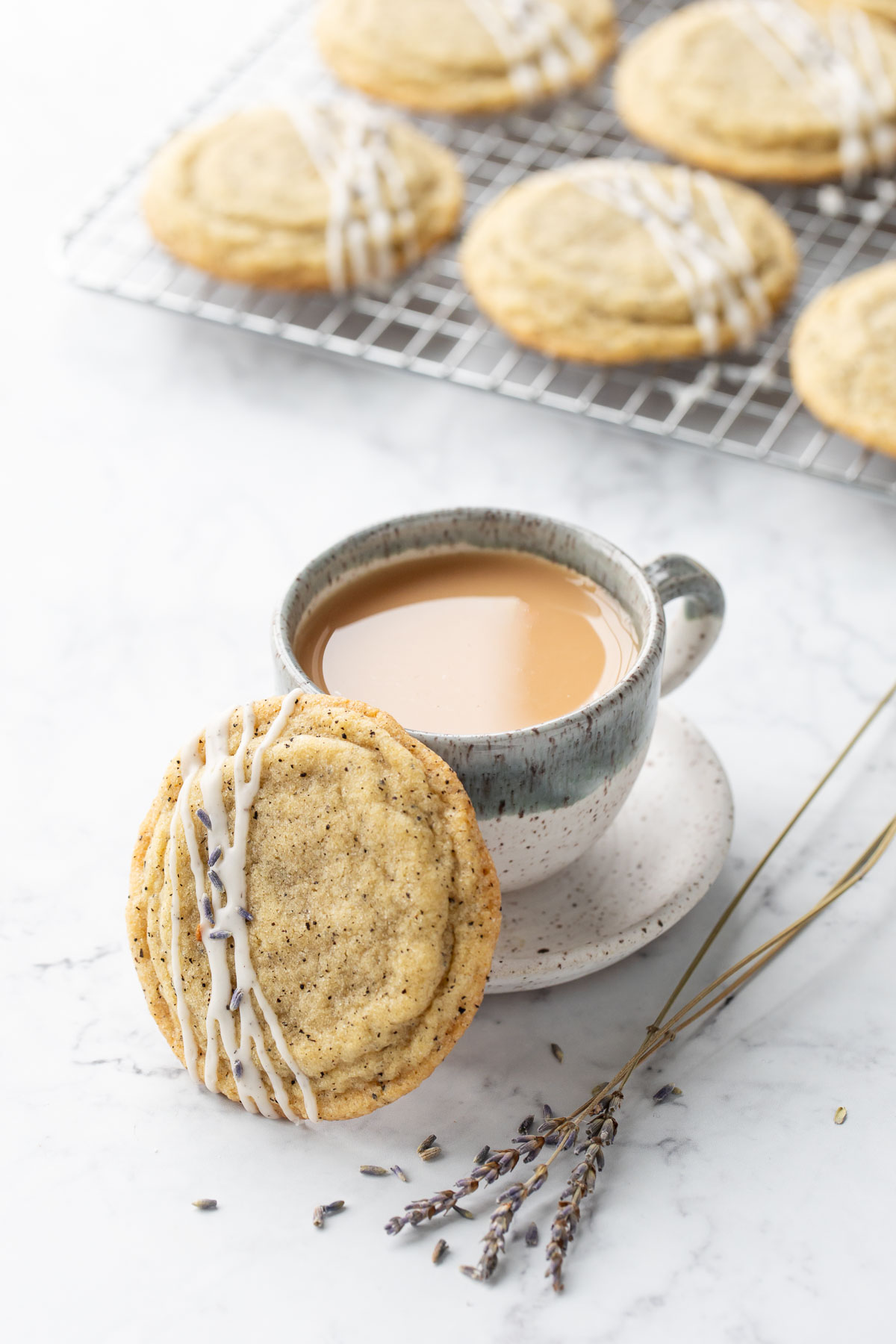
London Fog Sugar Cookies (Earl Grey & Lavender)
Soft, chewy sugar cookies infused with Earl Grey tea, lavender, and vanilla to taste like your favorite London Fog latte! Better yet, these...